
Teaching Conflict Management Online: 8 Effective Strategies
Teaching conflict management online can feel a little awkward at first. You can’t always read the room the way you would in person, and a small misunderstanding can turn into a real mess fast. In my experience, though? It’s still totally teachable—and it’s worth doing well.
Employees spend an enormous amount of time dealing with workplace disagreements. One widely cited estimate from the CPP Global Human Capital Report (Workplace Conflict) puts the cost at $359 billion annually in lost productivity. So yeah, conflict training isn’t just “soft skills.” It’s practical.
What I like to do is make the class feel real and safe. We set expectations early, we practice with scenarios that match how people actually argue at work, and we build in quick checks so you can intervene before things escalate. If you’re ready to make your online conflict management training more structured (and less stressful), keep reading.
Let’s get into 8 strategies that work.
Key Takeaways
- Set norms in the first 10 minutes (what’s respectful, what’s off-limits, and how to flag issues) so people know the rules before tension shows up.
- Use a pre-training survey to identify sensitive topics early (and let participants choose how much they want to share).
- Intervene with a “pause + clarify” script when you see escalation signals—especially during breakout sessions.
- Keep engagement high with short media + fast interaction (polls every 7–10 minutes, scenario prompts, and quick knowledge checks).
- Practice with a repeatable framework (Listen → Clarify → Options → Agreement) using structured role-play.
- Debrief with specific prompts that force reflection on behaviors, not just opinions.
- Provide take-home tools (a norms charter, a conflict script card, and a self-assessment checklist) so learning doesn’t disappear after the session.
- Follow up with resources and next steps like a moderated forum or scheduled coaching check-ins.

Teach Conflict Management Online Effectively
The first thing I tell facilitators is this: conflict management online isn’t “second best.” It’s just different. You’ll rely more on structure, scripts, and interaction—because you can’t see body language as clearly.
When I’ve run these sessions, the biggest win is realism. Don’t just talk about “managing conflict.” Show what it looks like in the wild: tone shifts in chat, people talking over each other in a call, passive-aggressive comments, or someone getting defensive when feedback is requested.
Here’s a simple approach I use every time:
- Start with a 2–3 minute scenario video (or a screen recording of a conflict moment in chat/email).
- Break into small groups (3–5 people) and assign roles (speaker, listener, observer).
- Run a timed practice loop (e.g., 8 minutes role-play, 3 minutes debrief, 2 minutes share-out).
Ever notice how a short clip can land faster than a slide deck? That’s because learners can “see” the behavior. If you need help creating those short teaching videos, this guide on how to create educational videos that really work is a solid starting point.
And no—please don’t make it stiff. I’m not saying be casual in a sloppy way. I mean keep your tone human. If you sound like you’re reading a policy, people shut down. If you sound like you’re guiding a conversation, they participate.
Set Clear Expectations and Group Norms
Setting expectations upfront is the easiest conflict prevention tool you have. I learned this the hard way during a session where we jumped straight into role-play. The content was fine, but the group didn’t have shared ground rules. Within 20 minutes, one participant kept interrupting and another started posting sharp comments in chat. It wasn’t “bad people.” It was missing structure.
Now I build norms into the first 10 minutes. Here’s what I include:
- Respect rule: No personal attacks, no sarcasm disguised as humor.
- Turn-taking rule: Use “raise hand” or a specific chat tag (like “pause”) before jumping in.
- Confidentiality rule: “What’s shared in this training stays here.” (I say it plainly.)
- How to flag issues: Participants can message me privately using a designated channel (chat DM, form, or email link).
- Facilitator intervention policy: If tone escalates, I’ll pause, name what I’m seeing, and redirect to the framework.
Then I ask everyone to agree to it quickly. Not a long debate. Just: “Can we commit to these norms for the session?” If someone hesitates, that’s a signal—address it immediately.
If you want a measurable way to do this, use a quick check: at minute 8, ask participants to answer a poll question like “Which behavior is never okay in this workshop?” If most answers match your norms, you’re set.
Identify Sensitive Topics Early
Let’s be real: some topics are conflict magnets. Pay transparency. Diversity and inclusion. Restructuring. Performance reviews. Even “remote work expectations” can get heated fast.
Instead of guessing, I prefer a pre-training survey. It also helps people feel safer because they can flag concerns anonymously.
Here are sample survey questions you can copy:
- Which topics feel most uncomfortable to discuss openly? (Select all that apply.)
- Have you experienced conflict related to: pay, workload, recognition, communication style, or leadership decisions? (Yes/No)
- What tone should we avoid in examples? (e.g., “blame,” “sarcasm,” “mocking,” “public call-outs”)
- Do you want to participate in role-play? (Yes / Prefer observer role / Not sure yet)
- Anything you want the facilitator to know about triggers or boundaries? (Optional)
Once you have the responses, adjust your examples. I also recommend acknowledging sensitivity at the start of the relevant section. Something like: “This topic can bring up real feelings. You don’t have to share personal details—use the scenario and keep it behavior-focused.” That one sentence prevents a lot of emotional spillover.
And yes, I recommend using fictional or composite case studies when possible. People engage more when they don’t feel like they’re being asked to relive their own story.
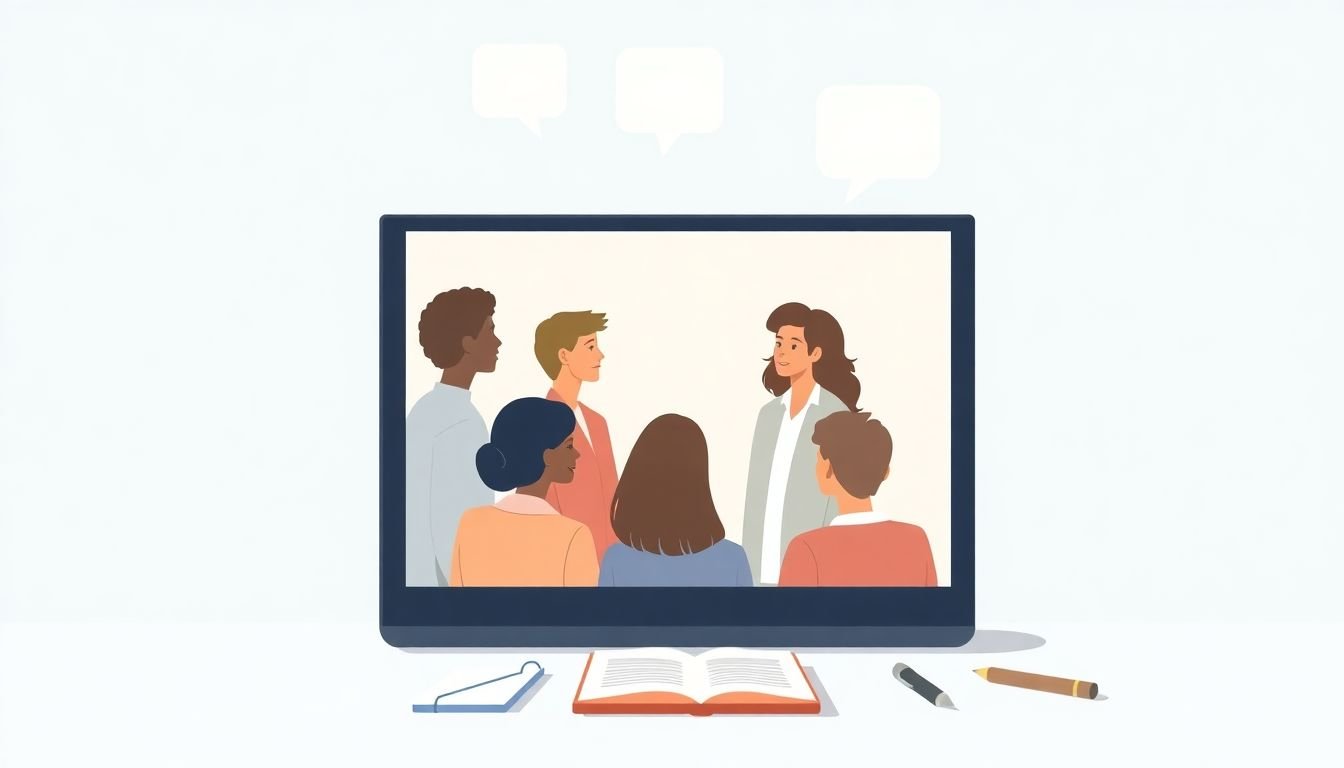
Detect and Intervene in Conflicts Early
Conflicts snowball online because everything is “visible” (chat logs, shared screens, reaction patterns). If you wait too long, people lock in their positions.
What I do is check for early signals:
- Chat tone changes: sarcasm, passive aggression, or short clipped messages
- Participation drop: someone stops speaking or stops turning on camera
- Overlapping interruptions: multiple people talking at once without turn-taking
- Breakout room collapse: groups go quiet or one person dominates
During the session, I run quick check-ins every 10–15 minutes. Examples:
- “Any concerns you want me to address before we move on?”
- “Thumbs up / thumbs sideways: are we on the same page with the framework?”
- “Type one word in chat for how you’re feeling about this scenario.”
When something escalates, don’t improvise from scratch. Use a pause script you practice ahead of time. Here’s one I use:
Pause + clarify script: “Let’s pause. I’m hearing two different perspectives. I want to slow this down and make sure we’re talking about the same issue. [Name the behavior, not the person]. What does each person need to move forward?”
And here’s the part most people skip: decide quickly whether to address it publicly or privately.
- Public intervention if it’s a group norm or a visible escalation pattern.
- Private follow-up if it’s personal tone, a specific participant dynamic, or something that could embarrass someone in front of others.
In my experience, a short private message after class works better than prolonged public correction. Something like: “I noticed a tone shift in chat during the scenario. Let’s talk about what you were trying to communicate and how we can rephrase it.”
Use Engaging Training Methods
Engagement isn’t just about keeping people entertained. It’s how you prevent conflict. When learners are passive, they drift, misunderstand, and then “respond” in ways that come off hostile.
I structure online sessions around variety. Here’s a mix that consistently works for me:
- Short videos or clips (3–5 minutes) showing a conflict moment
- Relatable case scenarios (composite characters, realistic workplace details)
- Role-playing with timed rounds
- Quizzes (2–3 questions) to check understanding
- Interactive prompts (polls and chat responses)
Instead of “Any questions?” use prompts that force thinking. For example:
- “Share one sentence you could say to clarify needs without blaming.”
- “What’s one phrase that would escalate this scenario? What’s a calmer alternative?”
- “Which step of the framework is missing here: Listen, Clarify, Options, or Agreement?”
One more thing: keep media relevant. If your video example feels too generic (“two coworkers argue”), people disengage. If it looks like their actual world (“client deadline slipping,” “missed handoff,” “performance feedback”), they lean in.
If you’re curious about pricing or packaging more customized conflict management training, this guide to pricing online courses can help you think through options.
Practice Effective Conflict Resolution Strategies
People don’t learn conflict management by listening. They learn by trying—and getting feedback while it’s still safe.
My favorite way to keep practice consistent online is to teach a simple framework and then force it into every role-play:
Conflict Resolution Framework (easy to remember): Listen → Clarify → Options → Agreement
- Listen: summarize what you heard (“What I’m hearing is…”)
- Clarify: ask needs-based questions (“What’s most important to you here?”)
- Options: brainstorm 2–3 solutions without judging (“What could we try?”)
- Agreement: pick next steps and confirm (“So we’ll do X by Y date.”)
Here’s where I get specific with scripts. Use these in your role-play card so participants don’t freeze:
Scenario 1: Disrespectful language in a meeting
What to say: “I want to pause. I’m open to the disagreement, but I need us to keep the language respectful. Can we restate your point without personal comments?”
What not to do: “Don’t be rude.” (That turns it into a character attack.)
Scenario 2: Disagreement on pay or fairness
What to say: “It sounds like you’re concerned about fairness and recognition. What outcome would feel fair to you?”
What not to do: “That’s not how it works.” (You’ll trigger defensiveness.)
Scenario 3: Heated debate about a deadline
What to say: “Let’s clarify the shared goal first. Is the priority quality, speed, or risk reduction? Then we can compare options.”
What not to do: Jumping straight to blame (“You missed your part.”)
Scenario 4: Passive-aggressive chat messages
What to say: “I might be misunderstanding your message. When you wrote ‘sure,’ what did you mean? What do you need from me right now?”
What not to do: Calling them out publicly (“Stop being passive aggressive.”)
Timing matters. A practice agenda that works well for a 60–75 minute module:
- 0–10 min: Teach framework + walk through one example
- 10–25 min: Role-play round 1 (8 minutes play, 2 minutes reset, 5 minutes observer feedback)
- 25–40 min: Role-play round 2 with a different scenario (same framework, different trigger)
- 40–60 min: Debrief + “what you’d do differently next time”
- 60–75 min: Quick self-assessment + take-home plan
Also, simplify. According to the CPP workplace conflict report, many employees haven’t had formal training; breaking the steps down into actions people can perform makes a difference. (And yes, I’ve seen learners relax once they realize there’s a structure they can follow.)
Encourage Reflection and Debriefing
Debrief is where the learning sticks. Without it, role-play turns into “that was awkward” instead of “now I know what to do.”
After each scenario, I use the same 5-question debrief so learners know what to focus on:
- What behavior helped the conversation move forward?
- Where did the conflict escalate (tone, interruption, assumptions)?
- Which framework step was used well (Listen / Clarify / Options / Agreement)?
- What exact sentence would you use next time?
- What’s one boundary you’ll keep when things get tense?
I also manage airtime. If one person dominates, I’ll redirect gently: “Thanks—let’s hear from someone who hasn’t shared yet.” You want reflection from multiple perspectives, not one loud takeaway.
If you want a simple measurable outcome, do this at the end: ask learners to write one “commitment sentence,” like “In my next difficult conversation, I will start with a summary of what I heard.” Collect it or screenshot it. That’s your proof of learning.
Provide Resources for Continued Learning
The training shouldn’t end when the Zoom meeting ends. People forget unless you give them something concrete to use later.
Here’s what I include as take-home resources:
- Norms charter (1 page): respectful communication rules + escalation policy
- Conflict script card (front/back): pause script + clarification questions
- Self-assessment checklist (5 items): Did I listen? Did I clarify needs? Did I propose options? Did we agree on next steps? Did I maintain respectful tone?
- One reading or video tied to the exact scenarios you practiced
For the “why keep going” part, it helps to cite reality. One data point often referenced in training discussions is that only 14% of managers received conflict resolution training from their company (SkillPath). If that’s accurate for your audience, it’s a strong argument for ongoing support.
And yes, conflict costs are real. That same $359 billion annually figure is a reminder that conflict management skills affect productivity and culture—not just feelings.
So offer something beyond “here’s a PDF.” Consider a moderated forum or a monthly check-in where participants can bring anonymized conflict examples and practice rephrasing and next-step agreements.
FAQs
I keep it simple and operational. Clearly state participant behavior guidelines (respectful language, no personal attacks), participation expectations (how to engage in chat, when to use turn-taking), and communication policies (how you want disagreements handled).
Then I use a group charter method: a short set of norms on screen, reviewed in the first 10 minutes, plus a quick poll or “commitment check” to confirm everyone understands the rules. Finally, I revisit the norms right before role-play so people remember them when emotions rise.
Watch for patterns, not just one-off comments. Early signs include withdrawal (camera off or fewer contributions), abrupt tone shifts in chat (sarcasm, clipped replies), repeated interruption, and breakout rooms going quiet or dominated by one person.
Also, use structured check-ins: quick polls, chat prompts, and direct questions like “What’s unclear?” or “Any concerns before we move on?” Those moments surface tension before it becomes a full conflict.
Use methods that force participation, not just listening. Role-playing scenarios in breakout rooms work well when you give clear roles and timing. Multimedia helps too—short video clips or screen-recorded examples keep the conflict realistic.
I also like quick quizzes (2–3 questions) after a framework explanation, plus interactive discussion prompts that require specific responses. The goal is to keep learners actively practicing the language and steps of conflict resolution.
Reflection turns practice into skill. It helps participants process what happened, identify what worked (and what escalated), and connect the framework to real behaviors they can use later.
When debrief is structured—focused on specific behaviors and exact sentences—learners leave with usable takeaways instead of vague impressions. That’s what makes reflection essential.