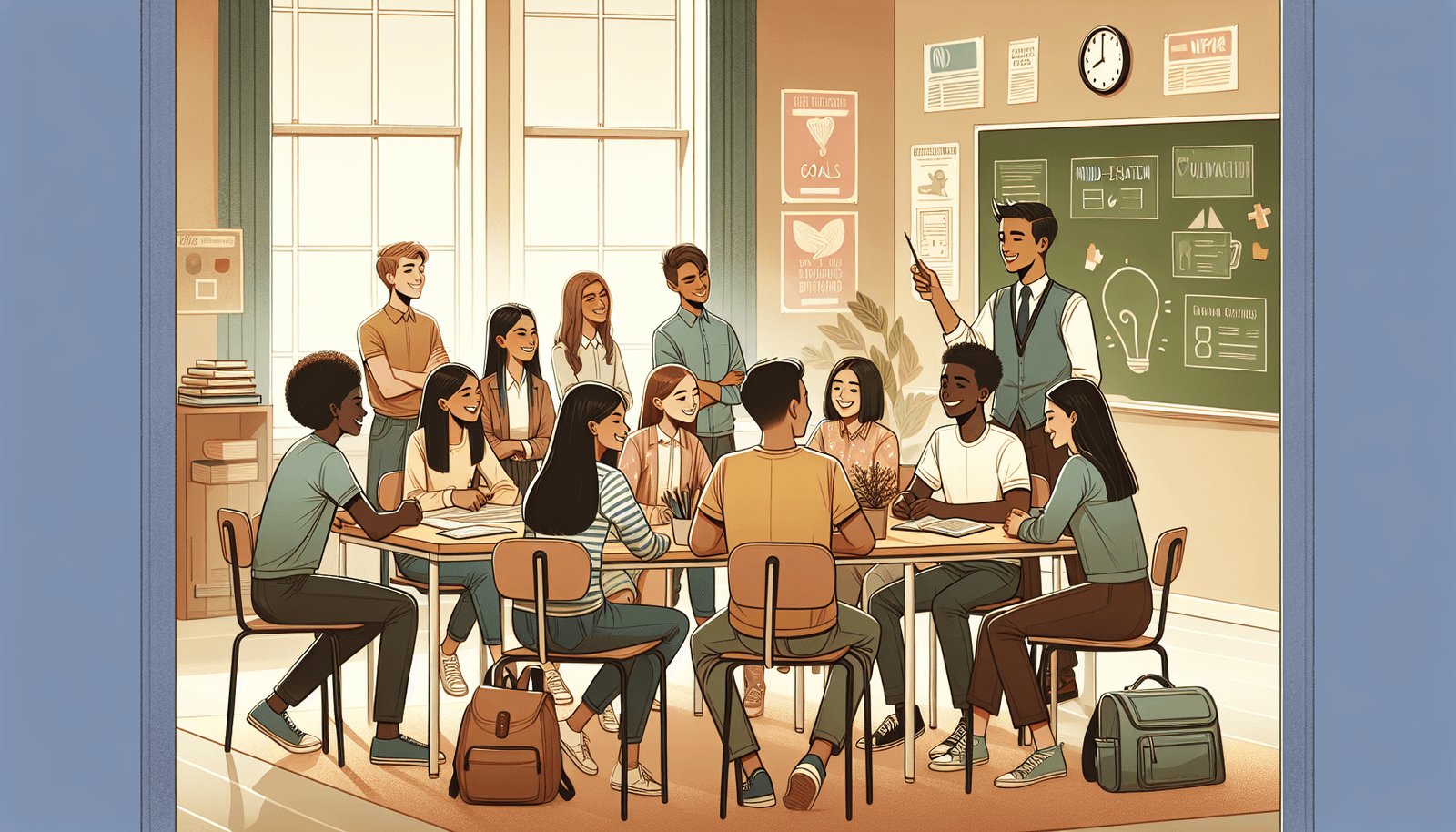
Student Engagement Techniques For Effective Learning Strategies
Keeping students engaged is one of those jobs that sounds simple until you’re standing in front of a room full of teenagers (or a quiet group of 6th graders who suddenly decide they “forgot how to listen”). In my experience, the problem rarely comes from one thing. It’s usually a mix of content that feels too abstract, activities that drag on too long, and students who don’t know what “good participation” even looks like.
Last year, I taught a unit that was heavy on reading and note-taking to a pretty mixed group (about 28 students, a mix of strong readers and kids who usually disengage early). I tried the usual approach—more examples, a few “check for understanding” questions, and a longer lecture with occasional discussion. It worked… for the first 10 minutes. After that, I could literally see attention drop: heads down, side conversations, and the same handful of students doing all the talking.
So I started rebuilding my lessons around short, structured engagement moves. Not “fun for fun’s sake,” but quick routines that force thinking, talking, and showing work. Below are the strategies that actually stuck in my classroom—plus what I do to keep them from turning into chaos.
Key Takeaways
- Use think-pair-share (but with timing and roles). I use a 3-2-1 structure: 3 minutes thinking, 2 minutes partner discussion, 1 minute whole-class share. If you don’t put a time limit on it, it turns into whispering and off-topic chat.
- Make collaboration concrete. For group work, I assign roles (facilitator, recorder, skeptic, reporter) and give each group a single deliverable (like a one-paragraph claim + evidence). Without a clear product, “group work” becomes social time.
- Use tech for feedback, not distraction. With tools like Kahoot! or Quizizz, I only use them when there’s a follow-up step (students explain one wrong answer; I group them by misconception). Otherwise it’s just clicking for points.
- Build relationships through quick, repeatable check-ins. I do a 30-second “warm/cool” check at the end of class (one thing you’re getting, one thing you’re stuck on). It’s not therapy—it’s data that helps me respond faster.
- Design for inclusion with choice + multiple ways to show learning. I offer at least two options for output (diagram, short written response, voice recording, or quick poster). Same standard, different path.
- Differentiate without doubling your workload. I use a “core + extension” model: everyone completes the same essential task, then students pick an extension card based on readiness. Collaboration with support staff helps me match supports to the student, not guess.

Effective Student Engagement Techniques
Active Learning Strategies That Don’t Waste Time
Active learning is basically the opposite of “sit and absorb.” The goal is simple: students do something with the content—think, talk, write, solve, build. But here’s the part people miss: active learning works best when it’s structured. Otherwise you get chaos, and the kids who already know the answers dominate the room.
One routine I rely on constantly is think-pair-share. Here’s the version I use (and why it works):
- Step 1 (Think): Pose a question. Students have 3 minutes to think and write a quick response (1-3 sentences). No writing? They don’t actually process.
- Step 2 (Pair): Partners compare answers for 2 minutes. I tell them to agree on one “best” idea, not just trade opinions.
- Step 3 (Share): Call on 3 different pairs (not 10 students). Ask the reporter to include an explanation: “What made you choose that?”
In my classroom, the measurable difference showed up in two places: (1) more students could answer similar questions on a quick exit ticket, and (2) participation became less “who’s brave today?” and more “everyone has a draft.”
Collaborative Learning Activities with Clear Roles
Group work can be great—or a disaster, depending on how you set it up. If you want real collaboration, you need rules for how groups talk and what they produce.
Here’s a setup that’s worked for me in classes of around 24–30 students:
- Group size: 3–4 students. Bigger than that and accountability drops.
- Roles: facilitator (keeps group on task), recorder (writes), skeptic (asks “how do we know?”), reporter (shares with class).
- Single deliverable: one-page “claim + evidence + reasoning” or a short problem solution, not five worksheets.
- Timebox: 12–18 minutes total. Then regroup for feedback.
Another option I love is peer teaching. Students take turns explaining a concept to their group using a prompt like: “Teach it like I’m new. What’s the first step?” This forces the student doing the teaching to organize their thinking, and it gives quieter students a more comfortable entry point than whole-class sharing.
Common failure mode? Groups finish early and start chatting. So I always include a “fast finisher” card: either a harder extension question or a request to improve their reasoning using evidence from the text/notes.
Use Technology in Engagement (Where It Actually Helps)
Technology can absolutely increase engagement—but only when it supports learning goals. If it’s just flashy content, students notice. They’ll play the game and still miss the concept.
Here’s how I use interactive quizzes (Kahoot!, Quizizz, similar tools):
- Before the quiz: I teach or review the concept with one example.
- During: I use 8–12 questions max so it doesn’t drag.
- After: we do a misconception check. I pull one question where lots of students missed it and ask: “Who can explain why the wrong answer sounds tempting?”
This turns tech from “points” into “understanding.” It also gives me quick data for grouping.
For discussion and brainstorming, I sometimes use Padlet or similar boards. My rule is simple: every post must include a reason or example, not just “I agree.” Students can add anonymously if needed, which helps when you have shy kids or students who fear being wrong.
Interactive Learning Tools (Pick the Right Type)
Interactive tools—simulations, guided slides, virtual labs—work best when they replace something passive. If you’re going to lecture anyway, VR probably won’t help. But if students need to “see” a process, a simulation can make the concept click.
For example, Nearpod and Pear Deck are useful when you want to pause the lesson and get responses from everyone. I like them for:
- quick checks for understanding (“Which step comes next?”)
- student-generated examples (students submit a diagram or sentence stem)
- teacher feedback in real time
One limitation I’ve noticed: some interactive tools eat time. If your lesson is already tight, keep the activity short (5–10 minutes) and plan the follow-up. The tool should lead to thinking, not become the main event.
Gamification Without the “Toxic Competition” Problem
Gamification can motivate students, but it’s easy to do it wrong. If your leaderboard only rewards speed, you’ll punish slower learners and reward students who already have the answers. That’s not engagement—that’s discouragement.
What I do instead is progress-based gamification:
- Points for improvement: students earn points for moving up from their own baseline (a pre-quiz score, last week’s performance, etc.).
- Badges for skills: “Best evidence,” “Clear explanation,” “Helpful peer,” “Question asker.”
- Team challenges: students earn group points for completing a task with quality, not just getting it first.
- Leaderboard rules: I usually show it as “team progress” rather than ranking individuals publicly.
That way, students who struggle still feel like they’re playing a role. And honestly? Parents and students tend to be happier with it, too.

Building Strong Student-Teacher Relationships
Open Communication Channels That Students Actually Use
Relationships don’t come from big speeches. They come from being reachable and consistent. When students know they can ask a question without getting embarrassed, engagement goes up.
In my classes, I build communication through:
- Short daily check-ins: 30 seconds at the end of class (“One thing you’re good with / one thing you need help with”).
- Office hours: even 2–3 days a week helps. Students remember that time slot.
- Easy channels: Google Classroom (for questions) and email for follow-ups.
If you’re using Google Classroom, I also recommend posting “question prompts” like: “What part of today’s lesson is confusing?” It reduces the blank-stare problem and increases the quality of student questions.
Personalizing Learning Experiences (Without Creating 30 Different Lessons)
Personalization doesn’t mean you rewrite everything for every student. It means you notice patterns and adjust the path.
One practical approach I use is a student profile that tracks:
- strengths (what they can do confidently)
- common barriers (reading stamina, math anxiety, language supports, etc.)
- interests (topics they care about)
Then I use “theme hooks” to connect content to their lives. In English class, for instance, I’ll let students choose between two texts that both hit the same skill (theme, inference, etc.), but relate to different interests. Same standard, different doorway.
Providing Constructive Feedback Students Can Use Tomorrow
Feedback is only motivating if students know what to do next. “Good job” doesn’t move anyone forward. I try to follow a simple pattern:
- Specific praise: “Your evidence matches your claim.”
- One target: “Now refine your reasoning—explain how the evidence proves the claim.”
- Time to apply: let them revise or answer a follow-up question right away.
Also—timing matters. If the feedback comes a week later, students forget the context. I aim for same-day or next-class feedback whenever possible, especially for writing and problem sets.
Creating an Inclusive Learning Environment
Understanding Diverse Learning Needs (And Building Variety Into the Lesson)
Different students access learning in different ways. Some need visuals. Some need language support. Some need hands-on practice. The trick is not to guess randomly—it’s to plan variety.
What I do is mix teaching modes on purpose:
- short direct instruction (with a worked example)
- guided practice with sentence stems or checklists
- collaboration with roles
- an independent “show what you know” option
If you’re not sure what students need, run a quick preference survey or ask students to reflect after a lesson: “Which part helped you most?” That gives you real signals instead of relying on assumptions.
Encouraging Student Voices with Low-Stakes Participation
Student voice isn’t just asking for volunteers. It’s creating multiple ways for students to contribute—especially for those who don’t want to speak up in front of everyone.
One routine that helps is “everyone posts, then we discuss.” For example, students can respond to a prompt in a forum like Flipgrid, or they can add to a board. Then you pick 2–3 responses to analyze together.
And yes—letting students lead matters. But I keep it structured. If you say “lead the discussion,” you’ll get silence. If you give them a script like: “I agree/disagree because… Here’s my evidence… I want to ask…” they’re far more likely to succeed.
Supporting Students with Different Needs (Core + Supports)
Inclusion means everyone can access the learning goal. That usually requires supports, not just “extra help.”
I start by checking what’s already documented (IEPs, accommodations, language needs) and then I coordinate with support staff when I can. From there, I use structured differentiation:
- Same core task: everyone hits the essential standard.
- Different scaffolds: sentence stems, vocabulary banks, graphic organizers, or audio support.
- Strategic grouping: sometimes mixed-ability, sometimes targeted support groups.
When grouping, I avoid “always put the same kids together.” It can accidentally limit opportunities. Instead, I rotate supports based on the skill being practiced.
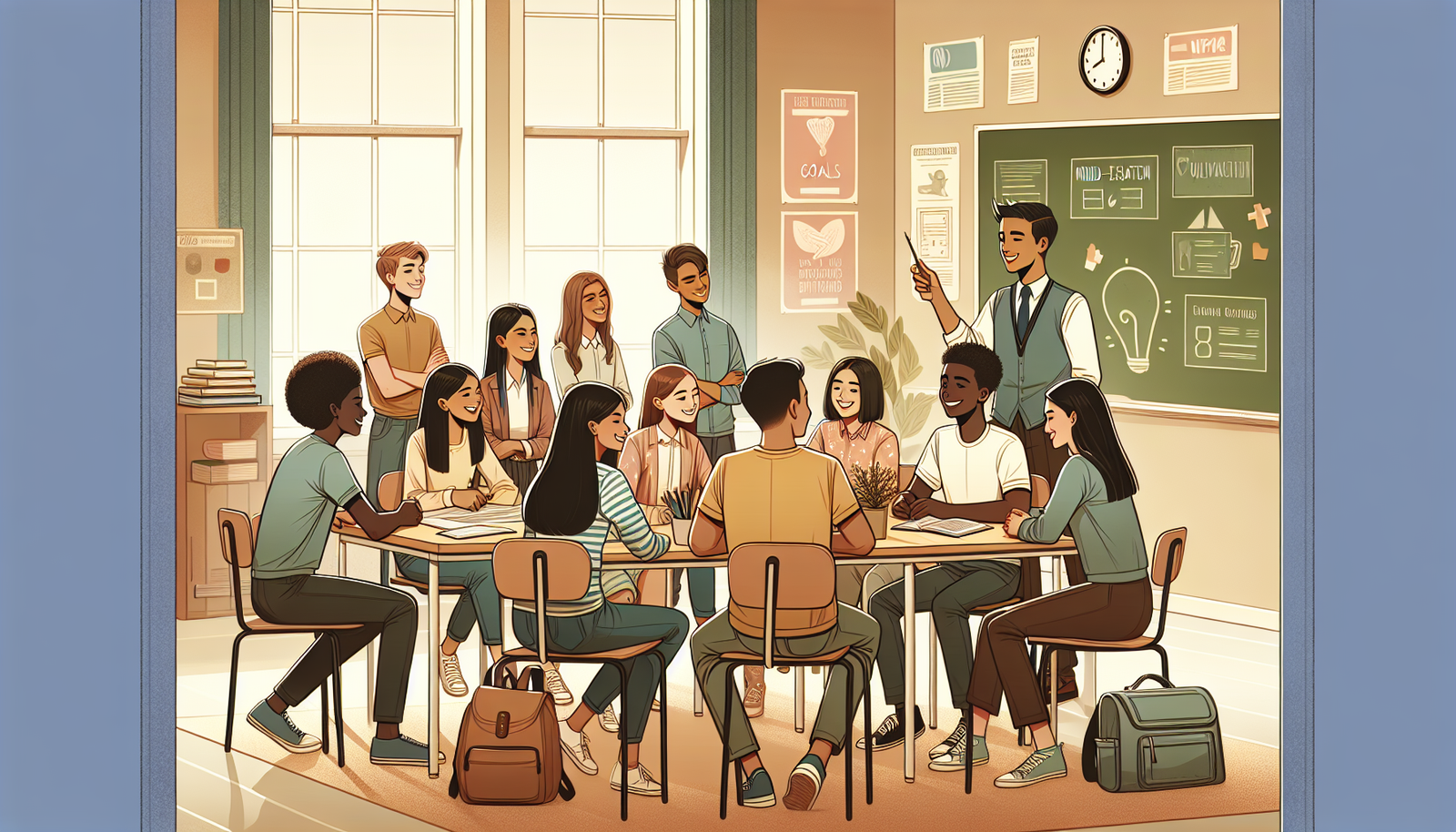
Strategies for Motivating Students
Set Clear Goals (And Make Them Small Enough to Win)
If students don’t know what success looks like, motivation drops fast. I learned that the hard way when I used vague objectives like “understand the concept.” Students can’t aim at something they can’t see.
Now I write goals in student-friendly language and break them into milestones. For example:
- Big goal: “Write a claim with evidence and reasoning.”
- Milestone 1: “Write a claim in one sentence.”
- Milestone 2: “Choose one piece of evidence.”
- Milestone 3: “Add one reasoning sentence.”
Then I celebrate the milestones, not just the final product. Small wins keep students engaged because they can actually feel progress.
Recognize Effort in a Way That Builds Confidence
Rewarding effort matters, but I try to be specific. “Good job” is fine for the moment, but it doesn’t teach students what to repeat.
Instead, I’ll say things like:
- “Your effort showed in how you revised your answer.”
- “I noticed you kept trying the second step even when it was hard.”
- “Thanks for asking a question—your thinking helped the whole group.”
I also use quick recognition systems like “student of the week,” but I rotate categories so it’s not always the same type of student getting picked. If you want tangible rewards, keep them low-stakes (homework pass, choice of seating for a day, lining up first). The goal is encouragement, not bribery.
Connect Learning to Real-World Situations Students Actually Care About
Relevance is a powerful motivator. But “real-world connection” can’t just be a random example. It needs to match what students are learning right now.
For instance:
- In math, use budgeting or sports stats problems with real numbers.
- In science, tie experiments to decisions people make (heat, energy use, environmental impact).
- In ELA, use arguments about issues they recognize (social media, school rules, community events).
I also like guest speakers when they truly connect to the unit. A field trip can work too, but I’ll be honest—sometimes it becomes a distraction. If I do a field trip, I build in pre-questions and a post-task so students leave with something academic, not just memories.
Assessing Student Engagement
Collect Student Feedback (Then Use It)
Feedback is the fastest way to figure out what’s working. But it only matters if you respond to it.
I use short, anonymous forms (Google Forms or SurveyMonkey) about once every 1–2 weeks. Questions are simple:
- What part helped you understand today’s topic?
- When did you feel lost?
- What should I change next time?
Then I tell students what I’m adjusting: “You said the practice felt confusing, so tomorrow I’ll add a worked example before group work.” That line alone builds trust and usually increases engagement within days.
Monitor Participation Without Making It Personal
Watching participation helps, but you don’t want it to feel like you’re tracking “who’s good” and “who’s bad.” I focus on patterns instead.
I use quick tracking during discussions—who speaks, who writes, who participates in a pair. Over time, I can see who consistently stays silent during certain types of tasks.
If I notice a student disengaging, I don’t call them out. I follow up privately with something specific: “I noticed you didn’t join the pair discussion today. Want to try the next one with a sentence stem?” It’s usually a confidence issue, not a motivation issue.
Adjust Techniques Based on What the Data Says
Engagement isn’t a guess. It’s something you can observe and measure with small signals.
If an activity flops—students don’t know what to do, or they disengage after 8 minutes—I change one variable at a time. Sometimes it’s the task clarity. Other times it’s pacing. And sometimes it’s grouping.
A simple adjustment framework I use:
- If students don’t start: add directions + example.
- If students start but drift: timebox and add roles.
- If students start strong but fade: shorten the activity and increase the check-for-understanding moments.
- If students don’t show understanding: add scaffolds or change the output option.
That keeps you from feeling like you’re “starting over” every week. You’re just iterating.
Continuous Improvement of Engagement Techniques
Stay Current (But Don’t Copy-Paste Everything)
Education trends move fast. I’ll admit it—I’ve tried new ideas that looked amazing online and didn’t fit my students or schedule. So I now treat trends like a menu: I pick what matches my reality.
That said, places like Edutopia and the Teaching Channel are solid for seeing what teachers are trying. I also keep an eye on newsletters and practical blogs, and I’ll occasionally follow thought leaders on Twitter or LinkedIn for fresh routines.
When I attend webinars or workshops, I look for one thing I can test within two weeks: a new exit ticket format, a grouping routine, a feedback method. Otherwise it turns into “inspiration” without results.
Professional Development That Changes Your Classroom
Professional development is only useful if it turns into classroom action. I get more out of workshops where you can practice the strategy (or get sample materials) than those that just talk about best practices.
If you can, attend local or state conferences and network with teachers who teach your subject and grade level. You’ll get better ideas than generic advice. And yes, sharing what worked (and what didn’t) is usually the most valuable part.
Share Best Practices (And Steal the Good Parts)
I’ve learned a lot from teacher communities. It’s not about reinventing everything. It’s about borrowing what works and improving it for your students.
For example, Teachers Pay Teachers can be useful when you filter for resources aligned to your standards and then adapt them. Local teacher groups and PLCs are great too—especially when you bring actual student work samples and talk about what misconceptions showed up.
Conclusion
Effective student engagement isn’t one magic trick. It’s a collection of small, repeatable choices: active learning with structure, collaboration with roles, technology that supports feedback, and relationships that make students feel safe to try.
When you add inclusive routines, clear goals, and real-world connections—and then actually measure what’s happening—you stop guessing and start improving. That’s the part that makes engagement feel sustainable, not stressful.
FAQs
Think-pair-share (with a time limit and a written draft), problem-based learning, and short interactive demonstrations are all strong options. The key is making sure every student has a role in the thinking—not just the loudest voices.
Interactive quizzes, multimedia lessons, and tools that provide real-time feedback can boost engagement. Just don’t stop at the “score”—follow up by having students explain answers, correct misconceptions, or apply what they learned.
Strong relationships create a safer classroom where students are more willing to participate, ask questions, and take risks. That usually leads to better academic performance and more consistent engagement over time.
Use a mix of student feedback, observation of participation patterns, and quick checks for understanding (exit tickets, short quizzes, or discussion notes). Then adjust your lesson based on what the data shows.