Sales Funnel For Online Course: Boost Your Course Sales Today
Are you struggling to sell your online course? If you’re thinking “am I even doing this right?”—yeah, you’re not alone. A lot of creators get stuck somewhere between posting content and actually getting enrollments. And honestly, it can feel like marketing is a secret code you’re supposed to decode before you’re allowed to succeed.
What helped me was treating course sales like a simple, repeatable process. Not vibes. Not random promotions. A sales funnel.
In this post, I’m going to walk you through the exact stages you need, what to put in each stage, and how to measure whether it’s working. I’ll also share a real example funnel structure (cohort-based vs self-paced), sample messaging, and a couple of mini “what we changed / what happened” case studies so you can copy the logic without guessing.
Key Takeaways
- A course sales funnel is a step-by-step journey that moves people from curious to convinced to enrolled.
- Your funnel stages can be Awareness, Interest, Decision, and Action—but the offers inside each stage matter more than the stage names.
- Awareness works best when your content matches one specific problem your students want solved (not “general education”).
- Interest should be built around one lead magnet + a short nurture sequence (7–14 days) that answers objections you hear in DMs.
- Decision is where you reduce risk: previews, proof, and a clear “who it’s for” offer page.
- Action should be frictionless: mobile-friendly checkout, trust signals, and a time-bound incentive that’s clearly explained.
- Tracking isn’t optional. Even basic metrics (opt-in rate, email click rate, checkout conversion) tell you where the funnel breaks.
1. Understanding a Sales Funnel for Your Online Course
1.1 What is a Sales Funnel?
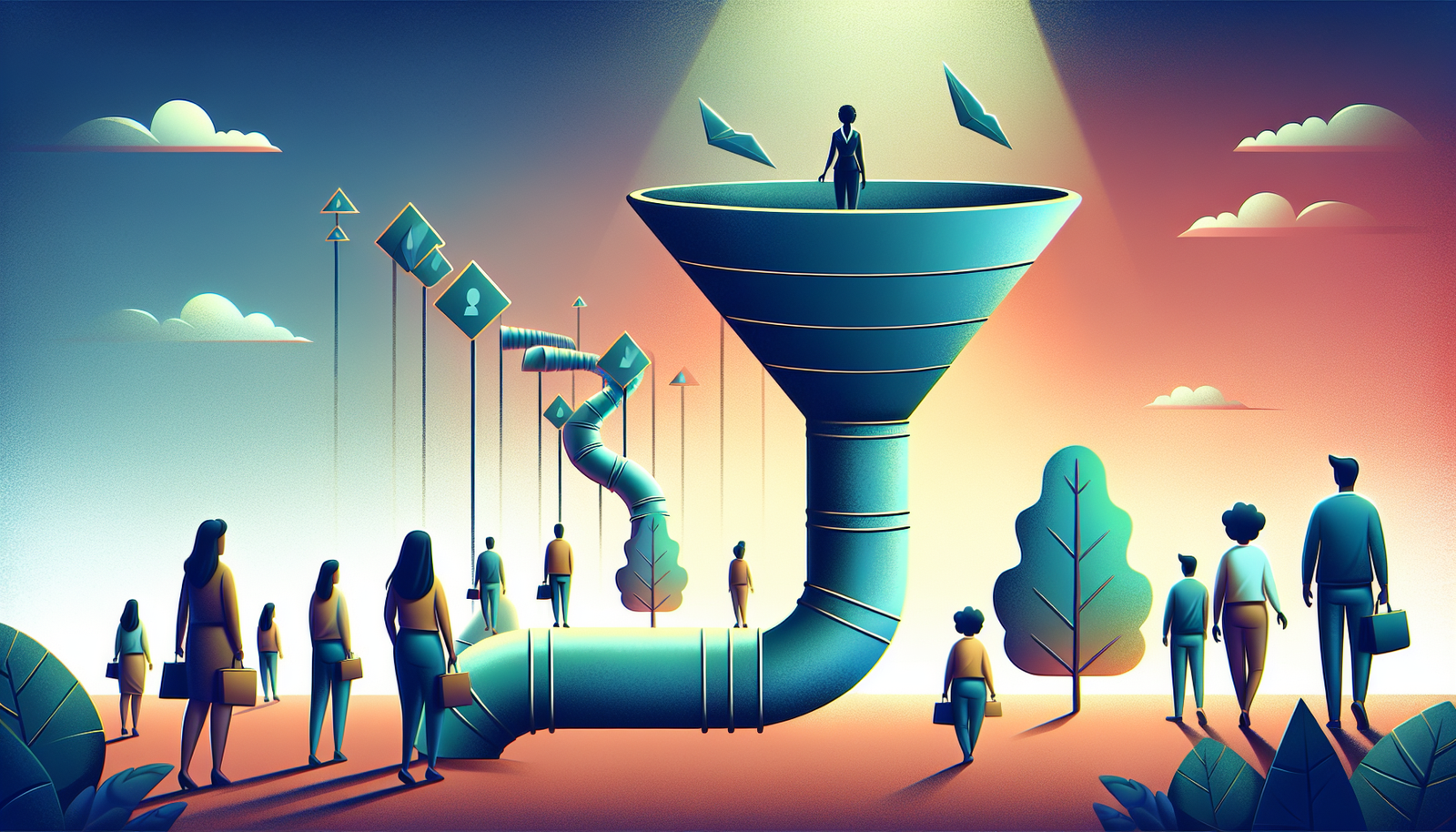
A sales funnel is basically a step-by-step path that shows people how to go from “I’ve heard of you” to “okay, I’m ready to enroll.” It’s the journey, not just the landing page.
For online courses, your funnel usually includes:
- Awareness: they discover your course (or your topic).
- Interest: they start trusting you.
- Decision: they compare your course to alternatives.
- Action: they pay and enroll.
One thing I’ve learned the hard way: you can’t just “have a funnel.” You need the right offer at each stage, plus a message that fits where the buyer is in their thinking.
1.2 Why a Funnel Matters (More Than Posting More Content)
Yes, content helps. But a funnel turns content into revenue because it does two jobs:
- It captures attention (opt-ins, clicks, video views).
- It moves people forward with proof, clarity, and a low-friction next step.
Also, funnels show you where people drop. Without that, you’re stuck guessing. And guessing is expensive.
1.3 How a Sales Funnel Works (A Practical Example)
Here’s what the process looks like in real life:
Awareness: you publish a short video or post that speaks directly to a specific pain (“Stop losing clients because your onboarding is confusing”).
Interest: you offer something free that helps immediately (a checklist, mini webinar, or a 10-minute worksheet). Then you follow up by email.
Decision: you show the course preview and answer objections (“Is this for beginners?” “Do I need experience?” “What results can I realistically expect?”).
Action: you make checkout simple and add a clear deadline or bonus that makes it a no-brainer to enroll now.
That’s the whole concept. Now let’s make it course-specific.
2. Stages of a Sales Funnel
2.1 Awareness Stage
Awareness is where people first land on your world. If they don’t instantly understand what you do and who it’s for, they won’t stick around long enough to buy.
2.1.1 Creating Engaging Content (That Actually Attracts Buyers)
In my experience, the fastest way to improve awareness is to stop making content about your course and start making content about the problem your course solves.
Try one of these content angles:
- Myth-busting: “3 reasons your study routine keeps failing (and what to do instead)”
- Before/after: “I fixed my workflow in 14 days—here’s the system”
- How-to: “Set up your first landing page in 30 minutes”
- Story: “I tried X for 2 months. Here’s why it didn’t work.”
Quick benchmark: if you’re getting 1,000 visitors to your awareness content and only 10 opt in, that’s a 1% opt-in rate. That’s not “bad,” but it tells you your message-to-audience fit needs work (or your lead magnet isn’t compelling enough).
2.1.2 Social Media for Reach (Organic + Paid)
Social media is great for reach, but it’s also where you can learn what your audience actually cares about. I usually track:
- Which posts get saves/shares (not just likes)
- Which topics spark DMs
- Which videos people rewatch (signals intent)
If you run ads, don’t advertise your course. Advertise the outcome and the mechanism. Example:
- Instead of: “Enroll in my course!”
- Use: “Get a 7-day plan to go from idea → first customer (template included)”
That leads naturally into your lead magnet.
2.2 Interest Stage
Interest is where you earn the right to sell. People aren’t buying yet—they’re deciding if you’re credible and if your course will help them.
2.2.1 Free Resources That Convert (Lead Magnet Ideas by Niche)
Here’s what I’d recommend instead of generic “get a free eBook.” Your lead magnet should be:
- Specific (tied to one problem)
- Actionable (they can use it today)
- Connected to your course (so the next step feels natural)
Examples you can steal:
- For course creators: “The 4-Page Funnel Checklist (Awareness → Action)”
- For fitness coaches: “Beginner Weekly Training Template + Progression Rules”
- For career coaches: “Resume Rewrite Scorecard + 20 common mistakes”
- For language teachers: “30-day speaking practice plan (with daily scripts)”
Lead magnet landing page tip: include one short “what you’ll get” section with 3 bullets, plus a preview image or 20–30 seconds of explanation video. People want to know what they’re grabbing.
Sample email subject lines (lead magnet delivery):
- “Here you go — your [template/checklist]”
- “Quick win from the template (try this today)”
- “Don’t miss this part: [common mistake]”
2.2.2 Email Marketing to Nurture Leads (A 10-Day Sequence You Can Use)
This is where most funnels either shine or flop. Your nurture sequence doesn’t need to be fancy. It needs to be consistent and relevant.
Here’s a practical 10-day nurture sequence for a self-paced course (you can tweak for cohort programs):
- Day 0 (immediately): deliver the lead magnet + 1 story about why you made it.
- Day 1: quick win lesson from the magnet (“Do this first, not last”).
- Day 3: objection handling (“Is this for beginners?” + 2–3 who-this-is-for examples).
- Day 4: mini case study (“A student did X and got Y”).
- Day 6: course preview email (“Here’s what module 1 looks like + what you’ll be able to do”).
- Day 7: FAQ email (“Time commitment, tools needed, support”).
- Day 9: soft close (“If you want the full system, here’s the course”).
- Day 10: final reminder with bonus/discount + deadline.
Segmentation criteria (simple but effective):
- Engaged: clicked a link in the last 7 days
- Warm: opened but didn’t click
- Cold: didn’t open twice in a row
Then send different CTAs:
- Engaged → send course page + preview
- Warm → send proof + FAQ
- Cold → send a shorter “quick win” email (and consider re-engagement)

2.3 Decision Stage
This is where prospects decide if your course is the best option. They’re usually comparing you against:
- free alternatives (YouTube, blogs, templates)
- other courses
- doing nothing (and staying stuck)
Your job in Decision is to reduce uncertainty and make the next step feel safe.
2.3.1 Course Previews and Samples (What to Include)
Free trial classes and sample lessons work, but only if they show the outcome path—not just “here’s my content.”
What I include in a preview for decision-stage emails:
- 60–90 seconds: “Here’s the result you’ll get”
- 5–10 minutes: one lesson that demonstrates the teaching style
- Action step: a worksheet or quick exercise they can do right away
Example preview script idea:
“In module 1, I’ll show you how to go from your topic to a clear offer. By the end of the lesson, you’ll have a one-page outline you can use immediately.”
That’s specific. Specific sells.
2.3.2 Testimonials and Reviews (Use the Right Proof)
Testimonials matter, but not all testimonials do the same job. Here’s what performs better:
- Outcome-based: “I went from X to Y in Z weeks”
- Role-based: “I’m a beginner / I’m a freelancer / I’m a stay-at-home parent”
- Objection-based: “I was worried about time / I didn’t have experience / I thought it wouldn’t work for me”
When I build testimonial sections, I try to include at least one “relatable” story for each customer type. If your course is for both beginners and advanced students, you need proof for both.
And yes—make a dedicated testimonials page if you have enough good quotes. It gives you a place to link from emails and the course page.
2.4 Action Stage
Action is where you convert. It’s not glamorous, but it’s where money happens. The goal is simple: remove friction and make the decision feel obvious.
2.4.1 Checkout Process That Doesn’t Kill Conversions
In my experience, small checkout issues can wipe out sales. Here’s what to check:
- Mobile layout: buttons are thumb-friendly, no tiny text
- Form simplicity: minimal fields, no confusing steps
- Payment options: at least one major option (Stripe/PayPal are common)
- Trust signals: refund policy, support contact, security reassurance
Also, don’t hide the “what happens after purchase” details. People worry they’ll pay and then get nothing.
Quick benchmark: If you have 200 course-page visitors and 10 purchases, that’s a 5% checkout conversion rate. Many course funnels land between 2% and 8% depending on traffic quality and price point. If you’re below 1%, it’s usually messaging mismatch or checkout friction.
2.4.2 Limited-Time Offers (Use Scarcity Without Being Weird)
Scarcity works when it’s real and clearly explained. “Limited-time” shouldn’t feel made up.
Options that tend to perform well:
- Bonus for 48–72 hours: “Get the bonus templates if you enroll this weekend.”
- Cohort start date: “Next live session begins on [date].”
- Price drop: discount for a short window (with a clear end time).
Promote it across channels, but keep the message consistent: what the bonus is, the value, and exactly when it ends.
3. Tools and Platforms for Building Your Sales Funnel
Tools don’t sell your course. But they can make your funnel easier to build, easier to track, and easier to improve.
Below are the main categories, plus what to set up inside each one (so it’s not just tool name-dropping).
3.1 Website and Landing Page Builders
You need two things: a home base (website) and focused conversion pages (landing pages). Landing pages should have one goal.
Platforms like Wix and Shopify can work for both. ClickFunnels is often used when you want funnel templates and less tinkering.
What to set up (minimum viable):
- Lead magnet landing page: headline, 3 bullets “what you get,” form, confirmation page
- Course sales page: who it’s for, outcomes, curriculum overview, proof, FAQ, CTA
- Thank-you page: what to do next (check email, watch preview, join community)
Tradeoffs:
- Wix: fast to launch, great templates; can be limiting for advanced funnel logic.
- Shopify: strong checkout + commerce; can be heavier/costlier if you’re not selling physical goods.
- ClickFunnels: funnel-first; you pay for convenience and templates, but it can be overkill for small setups.
3.2 Email Marketing Tools
Email is how you move people from “maybe” to “yes.” If you only use social media, you’re relying on algorithms you don’t control.
Tools like Mailchimp or ConvertKit help you automate and segment.
What to set up:
- Form integration: lead magnet opt-in connects to your email list
- Automations: add tag like “Lead Magnet: [Name]”
- Nurture sequence: 7–14 day emails with timed sends
- Behavior triggers: if they click course link, move them to “Decision” segment
Example automation logic:
- If someone downloads the checklist → start Day 0 email
- If they click the course preview link → send Day 6 preview email and tag “Clicked Preview”
- If they don’t open Day 1 → send a shorter “quick win” email next
Tradeoffs:
- Mailchimp: powerful, but can feel less “creator-friendly” for simple sequences.
- ConvertKit: often easier for tagging/automation and email-focused workflows.
3.3 Customer Relationship Management (CRM) Systems
A CRM is optional at first, but it becomes useful when you have multiple offers, affiliates, or sales conversations.
Tools like HubSpot or Salesforce can track leads and interactions.
What to set up (simple pipeline):
- Stage 1: New lead (opt-in)
- Stage 2: Engaged (clicked emails / watched preview)
- Stage 3: Decision (visited checkout page)
- Stage 4: Customer (purchased)
Then you can tailor follow-ups. For example: if someone visited the checkout page twice but didn’t buy, you can send a “refund policy + support” email (or a short video answering their likely concerns).
4. Tracking Your Funnel Performance
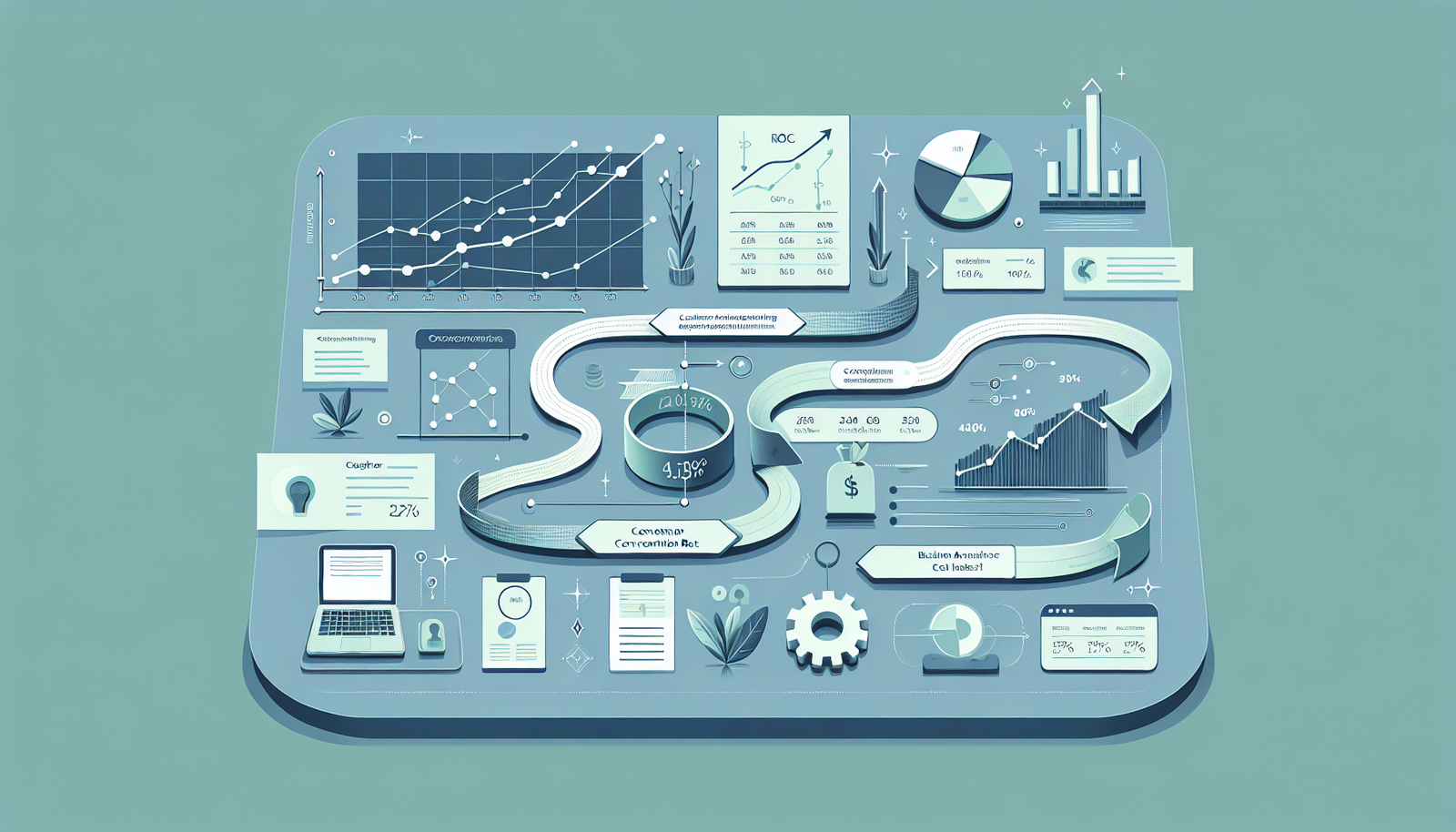
4.1 Metrics That Actually Tell You What’s Wrong
Let’s get practical. If you track nothing else, track these:
- Opt-in rate: opt-ins / landing page visitors
- Email click rate: clicks / delivered emails
- Course page conversion: purchases / course page visitors (or checkout starts)
- Checkout conversion: completed purchases / checkout page visitors
- CAC: total marketing spend / number of new customers
- ROI: (profit - cost) / cost
Example CAC + ROI calculation:
Let’s say you spend $500 on ads and email promotion. You get 20 new enrollments for a $149 course price. Assume course delivery costs are $20 per enrollment (platform fees, support, etc.).
Revenue = 20 × $149 = $2,980
Profit = (Revenue - delivery costs) = $2,980 - (20 × $20) = $2,980 - $400 = $2,580
ROI = (Profit - cost) / cost = ($2,580 - $500) / $500 = $2,080 / $500 = 416%
If your ROI is negative, you don’t “try harder.” You find the leak.
4.2 Analytics to Improve Your Funnel (No More Guessing)
Use Google Analytics to see what people do after they click. Then use qualitative tools to understand why they bounce.
Here’s what to look at:
- Bounce rate / time on page: are they getting what they expected?
- Drop-off points: are they leaving after the lead magnet form? after the first email?
- Traffic sources: are your best buyers coming from one channel?
For behavior visualization, I like using Hotjar for heatmaps and session recordings. You’ll often find surprising issues like:
- people can’t find the CTA button
- they scroll past the proof section without seeing it
- they click the wrong element because the page looks confusing
4.3 A/B Testing Without Overcomplicating It
A/B testing works, but don’t test 10 things at once. You’ll never know what caused the change.
Start with one high-impact element:
- Landing page headline
- Lead magnet button text (“Get the checklist” vs “Download now”)
- Email subject lines
- Course page CTA placement
Tools like Optimizely or VWO can run experiments, but even if you don’t use a paid tool, you can still do manual swaps and track results.
What matters most is volume. If you only have 30 visitors, your “winner” might just be luck. Give tests enough traffic before deciding.
5. Common Mistakes to Avoid in Your Sales Funnel
5.1 Skipping Audience Research
If you don’t know who you’re selling to, the funnel will feel like it’s working… but nothing will convert. Audience research doesn’t have to be complicated.
Do things like:
- read comments on your competitors’ posts
- pull questions from your DMs and emails
- run a quick poll (“What’s the hardest part of [problem]?”)
Then write your lead magnet and course offer to match those exact pain points.
5.2 Overcomplicating the Funnel
More steps usually means fewer buyers. The funnel should feel like progress, not paperwork.
If your lead magnet requires a 6-step form and multiple pages, you’ll lose people. If your nurture sequence has 20 emails and no clear CTA, your readers will tune out.
Keep your path straightforward:
- One offer at a time
- One main CTA per page
- Clear “what happens next” after opt-in
5.3 Forgetting Follow-ups
Most people don’t buy on the first touch. That’s normal. What’s not normal is letting leads go cold.
Automated follow-ups solve this. Send:
- lead magnet delivery
- quick wins and lessons
- proof and FAQs
- final CTA with deadline/bonus
Even if you’re not running ads, follow-ups help you turn “interested” into “enrolled.”
6. Best Practices for a Successful Sales Funnel
6.1 Build Brand Consistency (So People Recognize You)
Your funnel shouldn’t look like it was assembled from random templates. People trust consistency.
Use the same:
- tone of voice
- colors/fonts style
- message structure (headline → proof → CTA)
- examples and references
And make your USP clear. “I teach X” isn’t a USP. “I help beginners achieve Y using Z method” is.
6.2 Communicate Consistently (Not Just When You Want Sales)
One of the biggest mistakes I see is creators going silent until launch week. That’s rough because trust takes time.
Instead, aim for consistency:
- 1–2 valuable posts per week (or whatever you can sustain)
- email nurture that teaches, not just announces
- occasional personal updates (“Here’s what I changed in the course”)
Also, make your emails feel human. If every email sounds like the same sales page, people will ignore you.
6.3 Keep Improving (Your Funnel Should Evolve)
Your funnel isn’t “done” after you publish it. It’s more like a living system.
What I recommend:
- monthly review of conversion rates
- review support tickets + objections
- update the course page FAQ based on real questions
- test one improvement at a time
This is how you build compounding results. Not by changing everything—by improving what matters.
7. Case Studies and Examples
7.1 Mini Case Study: Cohort-Based Course Funnel (What We Changed)
Let me share a real-world style example from a cohort program (name removed to keep it anonymized).
Starting conditions:
- Course type: 6-week cohort with weekly live sessions
- Price: $299
- Traffic source: Facebook + Instagram ads
- Problem: lots of opt-ins, but weak enrollments
What we changed:
- Awareness: switched ad creative from “enroll now” to “free live lesson + seat availability”
- Interest: added a 7-day nurture with one live-session clip and one “who it’s for” segment
- Decision: updated the sales page to include a cohort schedule graphic + “what happens if you miss a live session” FAQ
- Action: added a bonus that only applied to the cohort launch week
Measurable outcome (after 3 weeks):
- Opt-in rate: 1.2% → 2.0%
- Email click rate: 2.8% → 4.1%
- Course page → purchase conversion: 1.6% → 3.0%
- Overall enrollments: +87% (with roughly the same ad spend)
Why it worked? The offer matched the buyer’s decision criteria. Cohorts aren’t just “content”—they’re commitment and schedule clarity. Once we made that obvious, the funnel got easier to say yes to.
7.2 Mini Case Study: Self-Paced Course Funnel (What We Fixed)
Here’s another anonymized example, this time for a self-paced course.
Starting conditions:
- Course type: self-paced (no live requirement)
- Price: $149
- Traffic source: YouTube → lead magnet
- Problem: decent opt-ins, but most people never clicked the course page
What we changed:
- Lead magnet: replaced a generic “guide” with a niche checklist tied to the first module outcome
- Nurture: shortened the sequence from 14 days to 10 days and added one “module preview” email
- Decision messaging: added a “time commitment” section and a realistic “what you can achieve in 2 weeks” claim (supported by student examples)
- Action: moved the CTA higher and added trust signals (refund policy + support response time)
Measurable outcome (after 2 weeks):
- Opt-in rate: 3.0% → 3.6%
- Email click rate: 3.2% → 5.0%
- Purchase conversion: 2.1% → 3.4%
- Revenue per visitor improved by ~62%
Big lesson: people weren’t rejecting the course—they were rejecting uncertainty. Once we reduced “will this work for me?” the clicks followed.
Want a quick funnel template?
Here’s the sequence structure I recommend for both course types:
- Awareness: content → landing page
- Interest: lead magnet → 7–14 day nurture
- Decision: preview + proof + FAQs
- Action: checkout + bonus/deadline
The main difference is how you handle commitment:
- Cohort-based: emphasize schedule, accountability, and seat availability
- Self-paced: emphasize flexibility, outcomes you can reach quickly, and how to stay on track
8. Conclusion and Next Steps
8.1 Build Your Funnel in Order (So You Don’t Waste Time)
If you take one thing from this, take this: build your funnel in the order of buyer thinking.
Here’s my suggested checklist:
- Pick your target problem and write a lead magnet that solves one part of it.
- Create a landing page with one CTA and a clear “what you get.”
- Write a 7–14 day nurture that answers objections (use real questions from your audience).
- Build a course sales page with outcomes, proof, and a strong FAQ.
- Make checkout mobile-friendly and add trust + a time-bound bonus.
- Track opt-in rate, click rate, and conversion. Then test one change at a time.
Once you get even one stage improving, the rest usually gets easier. That’s the compounding effect.
8.2 Resources for Further Learning
If you want to keep leveling up, these are solid places to learn more:
- Digital Marketer
- HubSpot Blog
- Udemy (course-specific marketing and funnel training)
- Skillshare
- Reddit’s Entrepreneur subreddit
Use these for ideas, but always tie them back to your actual numbers.
FAQs
A sales funnel for an online course is a structured process that guides people from first discovering your course to enrolling. It typically uses content, a lead magnet, email nurturing, and a sales page/checkout flow to move prospects forward.
A sales funnel helps because it nurtures leads over time, builds trust, and answers objections at the right moment. Instead of hoping people buy immediately, you give them a clear next step—and you can track where they drop off.
Track conversion rates by stage (opt-in, email click, course page purchase), plus customer acquisition cost (CAC) and ROI. These metrics help you spot bottlenecks and decide what to improve first.
Avoid skipping audience research, making the funnel too complicated, and failing to follow up. If people don’t understand your offer or you don’t nurture leads, conversions will stay low no matter how “good” your course is.