
Offering Financing Options For Students: How To Choose Loans
Paying for college can feel like you’re staring at a giant, unsolved math problem. One minute you’re excited about classes, and the next minute you’re thinking, “Okay… how am I actually going to afford this?” You’re not being dramatic—student debt is real, and it can be intimidating.
I remember helping a student walk through their options for the first time. They weren’t trying to “get rich.” They just wanted to know what to do next and what to avoid. What helped most wasn’t hype—it was having a clear order of operations: start with FAFSA, understand what federal loans will do for you, then use private loans only when there’s a real gap.
Here’s the same approach, step-by-step, so you can choose student financing options with way less stress.
Key Takeaways
- Start every year with FAFSA to unlock grants, work-study, and federal student loans. Don’t treat it like a one-time thing.
- Federal loans usually come with fixed rates, multiple repayment options (including income-driven plans), and borrower protections.
- Private student loans can fill the remaining gap, but they’re more dependent on credit (and often a cosigner) and may use variable rates.
- Before you sign anything, compare the full cost: interest rate type (fixed vs variable), repayment term, fees, and any protections.
- Build a realistic budget and estimate your first-year salary after graduation. If your payments won’t fit your life, it’s a sign to borrow less.

Explore Financing Options for Students
So you’re thinking about college and the big question shows up: “How am I supposed to pay for all of this?” For context, about 42.7 million Americans hold federal student loan debt, with an average balance around $38,375. That’s why it’s worth taking the time to understand your options before you accept anything.
In my experience, the easiest way to reduce anxiety is to start with the parts that don’t require repayment. Then you move down the list only as needed.
1) Start with FAFSA (every year). The Free Application for Federal Student Aid (FAFSA) is the gateway to federal grants, work-study, and federal student loans. If you’re eligible for a Pell Grant, that’s need-based aid you don’t repay. The FAFSA also helps your school determine other aid you might qualify for.
If you want to see what you’re eligible for and how the process works, use the official FAFSA site: https://studentaid.gov/h/apply-for-aid/fafsa.
2) Go after scholarships like it’s your job. Scholarships aren’t only for straight-A students or athletes. In fact, many awards are based on things like major, community involvement, or even background. I’ve seen students find multiple smaller scholarships that add up to real money. Start with reputable scholarship search sites like Fastweb and Scholarships.com.
3) Consider work-study (if offered). Federal work-study can be a smart move because the job is designed for students. Hours are often flexible, and your school’s financial aid office typically coordinates eligibility and placement. It won’t pay everything, but it can cover groceries, books, or transportation—stuff that quietly drains your budget.
4) Look at employer tuition benefits. If you’re already working (or planning to), check whether your employer offers tuition assistance. Some companies cover a portion of tuition or require you to stay employed for a set period. If you’re unsure, ask HR directly—don’t wait for a “maybe someday” response.
5) Budget like you mean it. Borrowing is not just about tuition. It’s about everything that comes with school—rent, fees, books, and the “I didn’t know that cost existed” surprises. A simple budget can reduce the amount you need to borrow. If you want a practical way to organize your plan, you can also use this guide on content mapping to structure your own “what I need, when I need it” budget steps.
Understand Types of Student Loans
Once grants, scholarships, and savings don’t cover everything, loans become part of the picture. The main split you’ll deal with is federal student loans vs private student loans. They’re not interchangeable, and the differences matter.
Federal student loans come from the U.S. Department of Education. The big advantages are borrower protections and repayment flexibility. Federal loans can include:
- Subsidized loans (the government pays the interest while you’re in school at least half-time and during certain other periods).
- Unsubsidized loans (interest accrues while you’re in school).
Federal loans also include options like income-driven repayment (IDR) and potential forgiveness pathways depending on your situation. You can confirm the current rules and program details on studentaid.gov/manage-loans/repayment/plans.
Private student loans come from banks, credit unions, or online lenders. Terms vary a lot between lenders. Many private loans depend heavily on your credit score (or your cosigner’s credit). Some loans offer fixed rates; others offer variable rates.
Here’s the practical takeaway: private loans can be useful—but they’re usually the option you use after you’ve maximized federal aid, because federal loans tend to come with more safety nets.
Quick order I recommend: FAFSA → grants/scholarships/work-study → federal loans → only then private loans to close a specific gap.
Evaluate Key Factors for Loan Selection
Okay, you know the types. Now how do you pick the right loan for your situation? Don’t just look at the interest rate and call it a day. I wish more people did.
Here’s what I’d check, in order.
1) Interest rate type: fixed vs variable
- Fixed means your rate stays the same for the life of the loan (federal loans typically work this way).
- Variable means the rate can change over time (common in many private loans). If rates move up, your payment can rise too.
2) Repayment term
Longer terms can lower your monthly payment, but you might pay more interest overall. Shorter terms can feel intense at first, but they often reduce total cost.
3) Fees (this is where people get surprised)
Some loans include fees like origination fees. A common way this shows up is an origination fee of around 1% (varies by lender and loan type). Let me show you what that can mean.
Mini example (origination fee impact):
- You borrow $10,000.
- Origination fee is 1% → $100 fee.
- If the lender subtracts the fee from the amount disbursed, you might receive about $9,900 but still owe $10,000.
Now compare two interest-rate scenarios on a simplified basis (just to show why rate matters):
- At 5% interest, total interest over repayment will be lower than at 8%.
- At 8%, interest piles up faster—especially if you don’t reduce principal early.
The point isn’t that this example matches every exact loan calculation (because repayment plans vary). It’s that fees + higher rates can quietly raise the real cost of borrowing.
4) Borrower protections and repayment flexibility
Federal loans generally offer more options if you hit hard times, including deferment/forbearance and income-driven repayment. Private loans may offer hardship programs, but they’re not standardized the way federal options are.
5) Your expected salary (and timing)
This part is uncomfortable, but it matters. If you borrow $30,000 and your entry-level job pays closer to $40,000 than $70,000, your monthly payment can feel heavier than you expected. Also, don’t forget there may be a grace period before repayment begins—timing changes everything.
What I do when helping someone decide: I ask them to estimate their first-year take-home pay, then compare it to an estimated monthly payment. If the payment would eat too much of their budget, we reduce borrowing or look at a different repayment pathway.
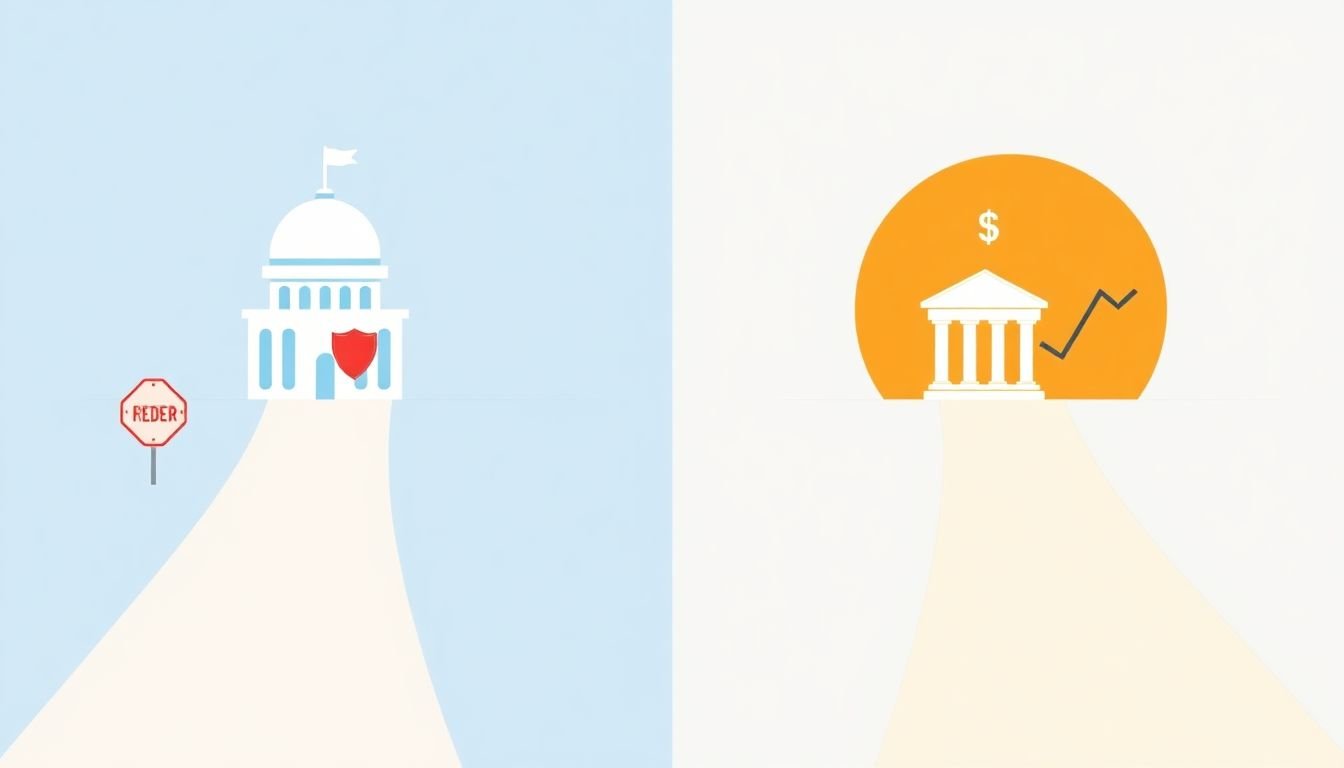
Compare Federal and Private Loans
If you’re trying to decide between federal and private loans, here’s my honest take: federal loans are usually the safer starting point. Private loans can fill gaps, but they come with more risk and less standard protection.
Federal loans:
- Fixed interest rates (rate doesn’t change after it’s set for the loan).
- Income-driven repayment (IDR) options that can lower payments based on income.
- Deferment and forbearance options if you can’t make payments for certain reasons.
- Borrower protections that are consistent across federal programs.
Private loans:
- Rates depend on the lender and your credit (or your cosigner’s credit).
- Some loans have variable rates, which can start lower and then rise later.
- Repayment options may be more limited and vary widely by lender.
Here’s a “real life” example of why variable rates can be tricky: if your payment is calculated off a lower starting rate, you might budget for that number. Then the rate changes, and your payment could increase. With federal loans, you’re more likely to have predictable terms and standardized paths for repayment.
My rule of thumb: max federal options first. Use private loans only if you still have a specific remaining amount after scholarships, grants, and federal aid.
Follow the Application Process
Let’s make the application process feel less like a mystery. Here’s how it typically works.
For federal loans (FAFSA):
- Complete the FAFSA online (and do it each year). Use the official site: FAFSA at studentaid.gov.
- Review your financial aid offer from your school. This is where you decide what to accept.
- Be ready to submit required documents if your school requests them (verification sometimes happens).
- Pay attention to deadlines. Missing paperwork can delay disbursement.
Before you start, gather what you’ll likely need: Social Security number, tax information (or tax returns), and financial account info (bank statements, etc.). If you’re a dependent student, you’ll also need parent information.
For private loans:
- Compare lenders side-by-side. Don’t just compare the headline rate—check fixed vs variable, repayment options, and fees.
- Submit an application. You’ll usually provide personal info and financial documentation.
- If you need a cosigner, expect the lender to evaluate both applicants’ credit and income.
- Review the promissory note carefully. This is where the “fine print” lives.
- After approval, confirm disbursement timing so it lines up with tuition due dates.
One thing to watch with private loans: multiple credit checks can affect your credit score. If you’re shopping lenders, try to do it within a short window (many scoring models treat rate shopping differently, but it’s not guaranteed—so check with the lender or your credit report guidance).
Make Informed Decisions on Financing
Making smart decisions about college financing comes down to three things: realism, math, and planning.
Realism: estimate what you can actually earn after graduation. If you borrow more than what your likely entry-level salary can comfortably support, you’re setting yourself up for stress.
Math: don’t just look at the total loan amount. Look at the monthly payment under the repayment plan you’ll actually be in.
Planning: set up a budget that accounts for loan payments after school ends. If you don’t know your payment yet, use a loan simulator from your federal loan servicer or your lender’s calculator to create a conservative estimate.
Here’s a simple checklist I’ve used with students:
- List every source of aid (grants, scholarships, work-study, federal loans, private loans).
- Estimate monthly payment using the repayment plan that applies after graduation.
- Compare that payment to your expected monthly take-home pay.
- Decide: borrow less, adjust your major/course load if possible, or reduce living costs.
Borrow less where you can: side gigs, on-campus work-study, and choosing lower-cost course options can reduce the amount you need to borrow. Even cutting $100–$200 per month from expenses can reduce how much you finance.
Loan forgiveness (if it fits your career path): don’t ignore this just because it’s “in the future.” If you’re considering public service or certain nonprofit work, check the Public Service Loan Forgiveness (PSLF) program. Eligibility depends on your employer type and whether you make qualifying payments under an approved repayment plan. There’s also TEPSLF (Temporary Expanded PSLF) for some borrowers who didn’t previously qualify.
To verify current requirements and steps, start with the official PSLF page: studentaid.gov/manage-loans/forgiveness-cancellation/public-service. And yes—there are forms to submit, including the Employment Certification.
Review your loan status regularly. Life changes. If you change jobs, income, or plans, your best repayment strategy might change too. For federal loans, you can often adjust repayment plans. For private loans, you’ll be dealing with lender-specific terms.
One last thought: if budgeting feels overwhelming, don’t just “wing it” during school. Build a basic monthly plan and stick to it. You’ll borrow less if you can see the gap early instead of discovering it when tuition is already due.
FAQs
Federal loans usually have fixed interest rates, borrower protections, and repayment options like income-driven repayment. Private loans can have fixed or variable rates, and approval often depends heavily on credit (and a cosigner, if applicable). Private loans typically offer fewer standardized protections.
Start by comparing the full details: interest rate type (fixed vs variable), repayment term, fees, and any borrower protections. Most students should review federal options first because of the standardized benefits. If you still have a gap after federal aid, then compare private lenders carefully.
For federal loans, complete the FAFSA, review your aid offer, accept the loans you want, and complete any required counseling or paperwork. For private loans, you apply directly with the lender, provide documentation, and meet their credit/income requirements (including cosigner requirements if needed).
You can also use grants, scholarships, work-study, and employer tuition assistance. These options don’t usually require repayment, which is why they’re worth pursuing before you rely on loans.