
Navigating Political and Social Issues in Education: 7 Key Strategies
Navigating political and social issues in education can feel like trying to solve a Rubik’s Cube blindfolded—nearly impossible, a little overwhelming, and somehow still doable if you know what you’re doing. I get it if you’re worried about sparking debate, upsetting families, or having students say things that land badly. Those concerns are real.
What I’ve learned (and what I try to build into my lessons) is this: your job isn’t to make everyone agree. Your job is to help students practice thinking, listening, and expressing ideas in a way that doesn’t turn into a classroom free-for-all. That’s the whole point.
Below are 7 strategies I use to keep discussions meaningful, respectful, and grounded in evidence. I’ll include concrete classroom moves you can copy, plus what to do when things get messy.
Key Takeaways
- Start with a 10-minute “hook + norms” routine so students know what to do before you ask them what they think.
- Use a repeatable discussion protocol (talking piece, sentence starters, and a “disagree with ideas, not people” rule).
- Address polarization by teaching students how to check sources and separate claims, evidence, and reasoning.
- Bring in local perspectives using one guest speaker or community artifact per unit (not random links).
- Co-create a short set of discussion principles with students and post it where everyone can see it.
- Build empathy through structured perspective-taking (role cards, reflection prompts, and case-study comparisons).
- Teach sensitive topics with scaffolding: short readings, guided questions, and opt-in alternatives for students who need them.

1. Engage Students in Political Discussions
I used to think “just ask a good question” would be enough. It isn’t. What works better is a quick routine that lowers the stakes and gives students a clear starting point.
A simple 10-minute start (works in grades 6–12):
- Minute 0–3: Hook — show a short, neutral clip or screenshot from a current event. Keep it under 90 seconds.
- Minute 3–6: Norms — say the discussion goal out loud: “We’re practicing evidence-based reasoning, not winning.”
- Minute 6–10: Low-pressure writing — students answer one prompt in 3–4 sentences.
Then you move to conversation. For example, when we discussed school board decisions (like changing curriculum materials), I used this student-facing prompt:
“What is the claim in this article/video? What evidence does it use? What question do you still have?”
Now you’re not asking students to pick a side first. You’re asking them to read and analyze.
If you want more ideas on getting students to participate without forcing it, you can pair this with student engagement techniques.
Also, don’t rely on only one medium. In my experience, a mix works best: one short video, one short article, and one infographic or data chart. You don’t need five sources—two or three is enough if they’re credible and readable.
2. Foster Constructive Dialogue in the Classroom
Constructive dialogue isn’t something students magically know how to do. It’s a skill, and skills need structure.
My go-to protocol (20–30 minutes):
- Step 1: Set the rule — “Disagree with ideas. No personal attacks. No labeling people as dumb, evil, etc.”
- Step 2: Use a talking piece — only the person holding it speaks. Everyone else must listen with a purpose.
- Step 3: Sentence starters — put these on the board:
- “I understand your point about ____. I see it differently because ____.”
- “Can you point to where you got that evidence?”
- “One thing that supports your claim is ____. One question I have is ____.”
- “I changed my mind about ____ after ____.”
- Step 4: Reflection exit ticket — 3 questions, 5 minutes total:
- What was the strongest argument you heard?
- What evidence would you want to see?
- What do you still disagree with (and why)?
Role-playing can help a lot, but make it specific. Instead of “pretend you’re someone else,” use role cards with constraints. For instance, I’ve used cards like: “You represent a student with limited transportation,” “You represent a parent worried about safety,” or “You represent a librarian protecting access to resources.” Students aren’t just arguing—they’re reasoning within a scenario.
And yes, debate can work. Just don’t let it become a speed contest. I prefer “structured academic controversy” where students first argue for a position, then switch and argue the other side using the same evidence requirements.
3. Address Political Polarization and Controversy
Polarization shows up fast in classrooms. One student says “everyone knows that,” and suddenly the rest of the room is stuck reacting instead of thinking.
Here’s what I do to slow it down:
- Start with origin questions — “Where did this information come from?” “Who benefits if we believe it?”
- Teach a simple source check — I use a 3-part checklist:
- Authority: Who wrote it? Are they qualified?
- Evidence: Does it cite data or just opinions?
- Transparency: Are methods explained? Are there limitations?
- Require evidence for claims — “If you say it, show it.”
A real example from my room: We did a lesson around controversies related to recent debates over educational policy (curriculum changes and standardized testing). A student brought in a viral post and presented it as fact. I didn’t scold them—I used it.
I said: “Let’s treat this like a primary source. What can we verify? What can’t we verify yet?” Then I had them work in pairs to find two additional sources (one data-based, one explanatory) and label each as supporting, contradicting, or unclear. The result? The class moved from “my side vs your side” to “what does the evidence actually show?”
For critical thinking, I like a short argument analysis sheet:
- Claim: ____
- Reasoning: ____
- Evidence: ____
- Potential bias/assumptions: ____
- Counterpoint: ____
- What would change your mind? ____
That last question does something important. It reminds students that learning is allowed to happen.
4. Collaborate with the Community for Local Insights
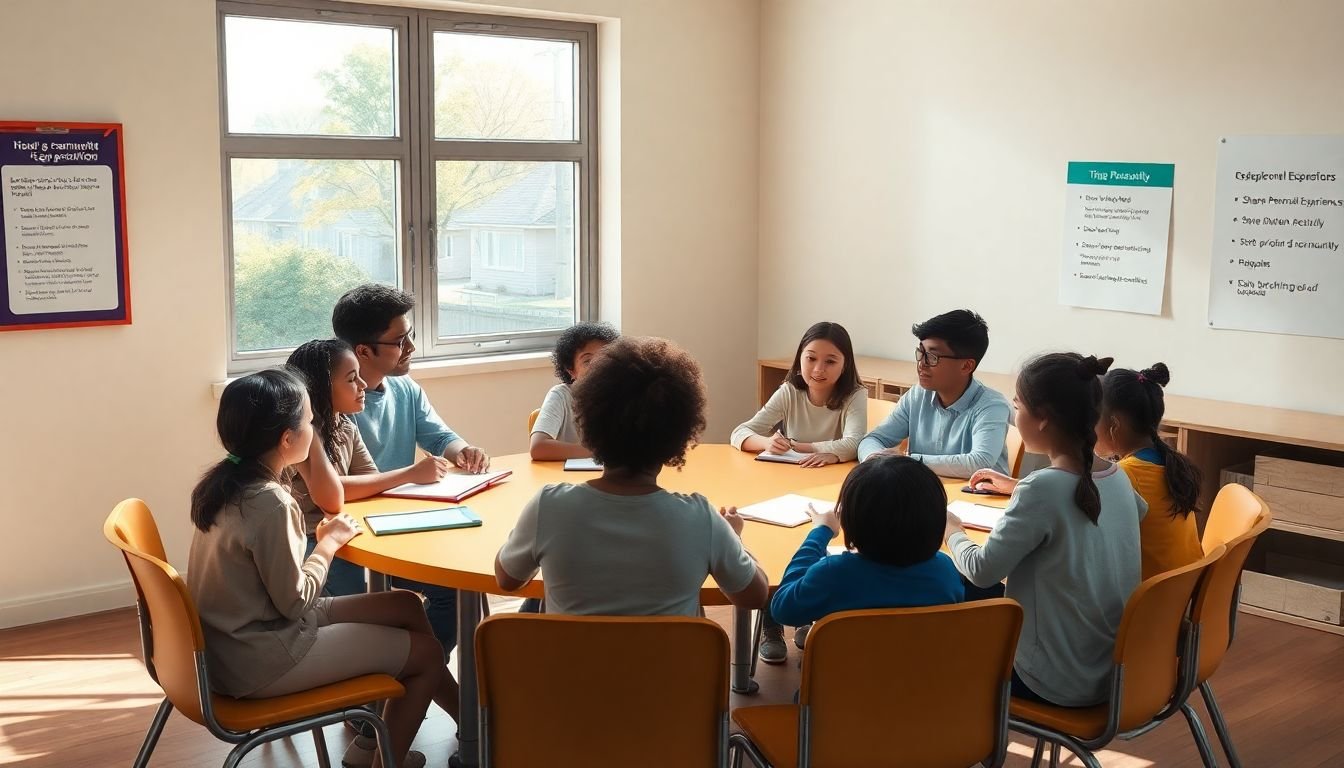
Community connections make these topics feel real—because they are. But I don’t do this as a random “let’s invite someone” thing. I plan it like an assignment.
What works well:
- Partner with one local organization per unit (a nonprofit, library, advocacy group, or university office).
- Use one concrete artifact from them: a flyer, a short data report, a community survey summary, or a policy brief.
- Give students a question list before the visit so they show up prepared.
For example, if you’re teaching about education funding, invite a speaker who can talk about how budgeting decisions actually get made locally. If the topic is health disparities, you might bring in a school nurse, public health outreach coordinator, or local clinic educator.
Field trips can be powerful too, but keep the “why” clear. I ask students to complete a “community observation” worksheet during the visit:
- What problem is being addressed?
- Who is affected?
- What evidence or data is used?
- What solutions are proposed?
- What question would you ask the community leader?
One more thing: student-led initiatives are great, but start small. A 2-week project like “Create a one-page community resource guide” or “Interview 3 stakeholders and summarize themes” beats trying to solve a huge issue in one semester.
5. Establish Principles for Respectful Discussion
Ground rules only matter if students helped build them. Otherwise, they feel like rules to students, not rules for students.
Here’s the worksheet I use (simple but effective):
- Principle #1: “We critique ideas, not people.”
Example: “Your argument overlooks ____.” (not “You’re wrong because you’re ____.”) - Principle #2: “We use evidence or we label it as opinion.”
- Principle #3: “We ask clarifying questions before assuming.”
- Principle #4: “We can change our minds with new evidence.”
- Principle #5: “Everyone gets a chance to speak; everyone listens.”
I also like to include a “sentence starter bank” on the same page. Students refer to it during discussions, and it reduces the pressure to be witty or loud.
And yes, I model it. If a student says something incorrect, I don’t jump in with “wrong.” I say something like: “Help me understand your evidence for that. What source are you using?” That tiny shift keeps the room from turning into a courtroom.
6. Encourage Critical Thinking and Empathy
Empathy doesn’t mean agreeing. It means understanding how someone got to their viewpoint and what experiences shape it.
Here are two activities that consistently work:
1) Perspective role cards (15–25 minutes)
- Give students a role with a goal and constraints (e.g., “You’re a parent balancing work hours,” “You’re a student affected by transportation,” “You’re a teacher managing limited resources”).
- They must produce a short “argument memo” that includes:
- What the role wants
- What evidence the role would trust
- What concerns the role might have
- A question they’d ask someone with a different role
2) Case-study comparison (20–30 minutes)
- Use one case where two groups disagree.
- Students complete a compare chart:
- Group A claim + evidence
- Group B claim + evidence
- Where they overlap
- Where they differ and why
- What would count as “proof” for each side
Want an easy way to assess? I use a quick rubric with 4 categories (1–4 points each): evidence use, reasoning clarity, listening/engagement, and empathy/perspective-taking. Total score out of 16. Simple, but it makes expectations concrete.
Also, don’t skip reflective writing. After one discussion about controversial curriculum topics, I asked students to answer: “What did you assume at first, and what changed?” That reflection is where you see growth.
7. Implement Strategies for Teaching Sensitive Topics
Sensitive topics require more than “be respectful.” You need pacing, scaffolding, and a plan for when students shut down or when conflict escalates.
Here’s a realistic lesson flow I’ve used for tough units:
- Day 1 (low stakes): short reading (1 page or less), guided questions, and a “what surprised you?” reflection.
- Day 2 (structured discussion): small-group protocol with sentence starters and a talking piece.
- Day 3 (application): students choose an evidence-based response (letter, infographic, or policy memo) that addresses a specific classroom or school concern.
Scaffolding that actually helps:
- Start with vocabulary previews (even 3–5 terms).
- Provide a model response for one question.
- Limit discussion time per student (for example, 45–60 seconds) so it doesn’t spiral.
- Offer an opt-in alternative: “If you need a pause, you can write a private reflection first, then rejoin.”
What to do when things go sideways:
- If someone makes a personal comment, I pause the discussion and restate the norm: “We critique ideas, not people.” Then I redirect: “What evidence supports your claim?”
- If a student refuses to participate, I don’t force them to speak immediately. I ask them to complete the analysis sheet first, then offer a role like note-taker, evidence checker, or question writer.
- If misinformation spreads, I stop the momentum and do a mini “source check” as a class. That turns a problem into a teachable moment.
And if your school allows it, connect sensitive topics to student agency. One practical approach is having students propose a small, realistic policy change based on their research—something like revising a homework policy, improving access to tutoring, or creating a more inclusive classroom resource plan. It keeps the discussion tied to learning outcomes instead of personal attacks.
FAQs
Use a hook + norms + writing routine before you talk. Give students a 3–4 sentence prompt that focuses on evidence (claim/evidence/question), not “who’s right.” Then move into discussion using sentence starters. If you want participation without pressure, require that everyone contributes one written idea first, then volunteers to share.
Go beyond “be respectful” by using a repeatable structure: a talking piece, time limits (like 60 seconds per turn), and a requirement to use evidence or label it as opinion. I also recommend a quick “build on ideas” rule: students must respond with either “I agree because…” or “I see it differently because…” before they can critique.
Teach students a source-check routine and make it part of the assignment. For example: require 2 credible sources for each claim and use a simple chart (supports/contradicts/unclear). When students argue from assumptions, pause and ask: “What evidence would change your mind?” That question reduces heat and increases thinking.
Pick one local issue and match it to one local partner. Give students pre-written questions and a one-page reflection form for after the visit. If you invite a speaker, ask for a short, neutral overview plus data or examples (not just opinions). Then have students evaluate the speaker’s claims using the same evidence checklist you teach in class.