Integrating Data Visualization in 11 Simple Steps
Honestly? I’ve stared at “pretty” charts that told me nothing. You know the ones—busy colors, tiny legends, and a title that promises insight but delivers a guessing game. When that happens, the problem isn’t your data. It’s the way the visualization was built.
What I’ve found works every time is treating data visualization like a process, not an art project. If you follow a few solid rules (and test your work like a real user), you can turn messy numbers into visuals people actually understand and use.
Here are 11 simple steps I use to integrate data visualization into a course, dashboard, or report—without the clutter.
Key Takeaways
- Start with one clear outcome: what should someone know or do after looking.
- Match the chart to the question (comparison vs. trend vs. composition), not to what looks cool.
- Organize data in a predictable order (chronological, ranked, grouped) and label everything.
- Turn insights into a short story: insight → evidence → what it means for your audience.
- Design for the reader’s context and skill level—beginner-friendly doesn’t mean “dumb,” it means clear.
- Strip out anything that doesn’t earn its place: extra gridlines, decorative icons, redundant text.
- Add interactivity carefully (hover details, filters, drilling) so it helps without slowing the page.
- Use color for meaning, not decoration—and check accessibility (contrast + color-blind safety).
- Make it responsive: test on mobile sizes so labels, tooltips, and axes still work.
- Use AI-driven interaction only when it improves exploration (e.g., Q&A for non-technical viewers).
- Support deeper analysis with drilling and filtering so users don’t hit a dead end.
Start with Clear Data Visualization Goals
If you don’t know what you want people to take away, your chart will wander. I learned this the hard way on a project where we had 12 visuals for “student performance.” Guess what happened? Nobody could tell us what mattered most.
So I start by writing a one-sentence goal. Something like: “After 30 seconds, learners should understand which module has the biggest drop in retention and how it compares to the others.”
Then I ask: what action should they be able to do? Compare two items? Spot the trend? Identify the outlier? Make a decision?
Here’s a concrete example from a course dashboard I built. We had weekly completion rates for 6 modules (about 1,200 learner-week records). Before cleanup, the chart looked “busy” and people asked, “Is Module 4 actually worse or is it just noise?” After we set the goal to “show the biggest gap vs. average,” we switched the emphasis to a ranked bar chart with a clear “overall average” reference line. The support questions about “which module is the problem” dropped noticeably after the change.
And yes—having a clear purpose beats throwing random numbers and chart styles together.
Select Appropriate Charts and Graphs
Chart choice is where most “confusing visuals” are born. The rule I follow is simple: pick the chart based on the question, not what you’ve used before.
- Comparison (who’s bigger/smaller?): bar chart (horizontal bars help when labels are long).
- Trend over time (up/down): line chart with a clear time axis.
- Composition (what makes up the whole?): stacked bar for parts-of-a-total, or pie only when there are few categories.
- Relationship (does X relate to Y?): scatter plot (and consider adding a trend line).
One edge case that trips people up: if you’re comparing categories with very different counts, a pie chart can visually exaggerate tiny categories. In that situation, I’ll usually go with a bar chart and show exact values on hover.
Also, don’t forget your audience. A chart that impresses you can still intimidate someone else. If your viewer has to zoom in to read the axis labels, it’s not “advanced”—it’s just unusable.
Organize Data in Easy-to-Follow Patterns
Your chart type matters, but your layout matters just as much. I treat data organization like navigation: readers should never have to “hunt” for what they need.
Here’s the practical checklist I use:
- Group related data (same theme together, not scattered across the page).
- Use a predictable order: chronological for time, ranked for comparisons, and logical grouping for categories.
- Label immediately: title, axis labels, and units (%, $, users, minutes).
- Remove redundant legends when color only maps to one thing.
For example, if you’re showing performance by lesson, I’ll order lessons in the actual course sequence—not alphabetically. People don’t think alphabetically when they’re learning, right?
And if you’re building a multi-lesson learning experience, I like to keep the same “flow” in the visuals too. That’s similar to the thinking behind create a masterclass—you’re guiding someone step-by-step, not dumping information.
Craft Engaging Data Stories
People don’t remember raw stats. They remember what the stats mean.
When I’m writing the “story” for a visualization, I aim for a simple flow:
- Insight: what stands out?
- Evidence: what in the chart proves it?
- Meaning: what should your viewer do or believe?
For example, if you’re visualizing how teaching practices affect student retention, don’t stop at a bar chart of percentages. Add a short caption like: “Practice B outperforms Practice A by 12 percentage points among learners who completed the first week.”
Then, link the reader to something relevant so the story doesn’t end at the chart. If you’re working in education, you can connect it to effective teaching strategies to help learners take the next step.
Design for Your Audience
This is where charts either click—or fail. I always ask: what does the audience already know? If they’re beginners, they don’t want to decode jargon. They want clarity.
Here are some practical tuning choices I make depending on audience level:
- Beginners: fewer categories, clearer axis names, and tooltips that explain terms in plain language.
- Advanced users: allow more detail (like confidence intervals or multiple series), but keep the labeling consistent and readable.
Also, don’t underestimate the power of spacing. If your legend overlaps the data, your audience will miss the point—every time.
Quick self-test: if you cover the title and legend, can someone still tell what the chart is about within 10 seconds?
Simplify Visualization Components
There’s a huge difference between “minimal” and “empty.” Minimal means every element earns its place.
In practice, I remove anything that doesn’t help answer the goal. That includes:
- Decorative icons that don’t add meaning
- Redundant text (if it’s already on the axis)
- Too many gridlines (especially on small screens)
- Color used for decoration instead of mapping
Here’s a measurable rule I use: keep labels large enough to read on a phone. If your chart’s axis labels are smaller than ~12–14px, they usually become a blur on mobile. And if your tooltip text is tiny, people won’t bother to hover/click.
If you want examples of clean, purposeful design, I often reference popular visual storytelling work from sites like FiveThirtyEight, and I’ll also check simple infographic templates when I need a “layout reset.”
Add Interactivity for User Engagement
Interactivity is great—but only when it answers a question the static chart can’t.
What I’ve seen work best:
- Hover details that show exact values and context (not just “Series 2”).
- Filters for categories like region, cohort, or time range.
- Drill-down so users can explore without leaving the page.
Example of a good hover tooltip: “Module 4 — Week 3: 62% completion (▲ 5% vs previous week).” That’s actionable. A tooltip like “Value: 62” isn’t.
Performance matters too. If your interactive chart loads slowly, users bounce. I usually test with realistic data sizes (not just a tiny demo dataset) and make sure tooltips don’t lag.
And if you’re adding interactivity to an educational experience, it should support learning, not just exploration. That’s closely tied to student engagement techniques—prompt curiosity, then guide it toward understanding.
Use Color Intuitively
Color is a communication tool. When you use it well, people “get it” faster. When you use it randomly, they stop trusting the chart.
My baseline rules:
- Limit the palette (usually 3–6 distinct colors for key categories; more only if there’s a strong reason).
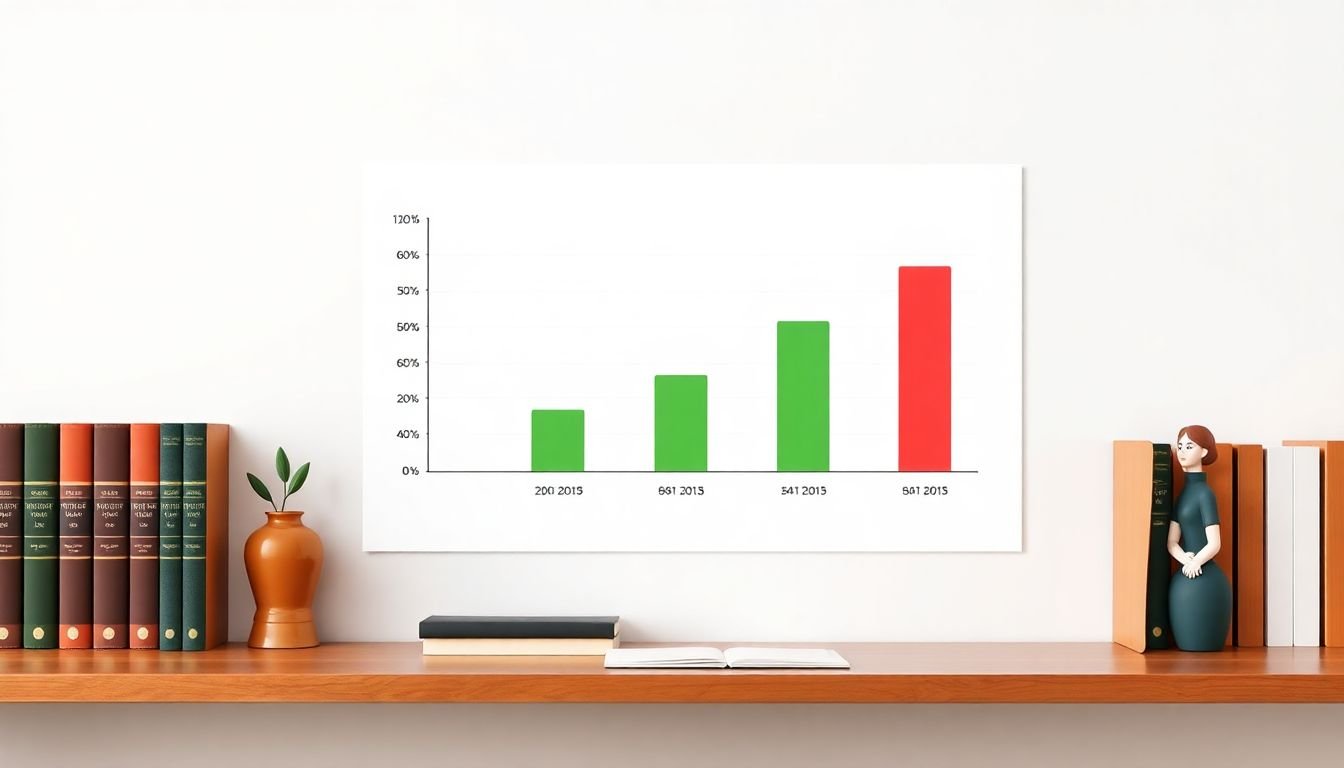
- Use color for meaning: for example, red for negative movement and green for positive movement, or a sequential scale for intensity.
- Don’t rely on color alone: add patterns, labels, or direct values when possible.
Accessibility check: if you can, simulate color-blind views before publishing. Tools like Colblindor can help you see whether your “difference” is still visible for common color vision deficiencies.
Another practical point: contrast. If your text or axis labels don’t have enough contrast against the background, users will struggle—even if the colors are “nice.”
Adapt Visual Scale for Different Platforms
Design once, break everywhere—this is what happens when you don’t test responsiveness.
I always preview on at least:
- Desktop (typical browser width)
- Tablet
- Mobile (around 360–420px wide)
On smaller screens, the first things to fail are usually axis labels, legends, and hover tooltips. If the tooltip covers the data or if labels overlap, you’ve basically made the chart harder than it needs to be.
One practical approach is using responsive settings that adjust font sizes, margins, and label density based on screen size. Even if you’re not coding, the charting tool settings often include options like “responsive mode,” “auto-wrap labels,” or “hide legend on small screens.”
If you’re comparing course platforms, for example, you want the visuals to be readable whether someone is on a laptop or checking from their phone—like what you’d do when you compare online course platforms.
Bottom line: always preview on multiple platforms before you call it “done.”
Enable AI-Driven Data Interaction
AI can be useful here, but I don’t treat it like magic. The best AI-driven data interaction does one thing: it lowers the barrier for asking questions.
For instance, natural-language Q&A features in tools like Tableau (“Ask Data”) or Power BI (“Q&A”) let users type: “Which module has the lowest completion rate this month?” Instead of forcing them to learn filters and measures first, you meet them where they are.
One caution from my experience: AI answers still need guardrails. If the dataset is messy or definitions are inconsistent (like “completion” meaning different things in different tables), the AI will confidently return the wrong thing. So you’ll still want clean field names, consistent metrics, and a quick validation step.
Implement Drilling and Filtering for Deeper Insights
If you want your visualization to be more than a screenshot, add drilling and filtering.
What drilling does: it lets users click a data point and see what’s behind it. What filtering does: it lets users remove irrelevant context and focus on what matters right now.
Here’s a concrete example. Say you’re looking at sales across all regions. A drill-down flow might go:
- Global sales (total)
- Region (North, South, etc.)
- Product (which product drives the change)
For educational content, the same concept works really well. Users can start at overall retention, then drill into module-level differences, and finally compare retention between lessons or cohorts.
And yes, this is the kind of interaction that improves satisfaction because users can answer their own questions in real time—without waiting for someone else to generate a new report.
FAQs
Start with the question. Use bar charts for comparisons, line graphs for trends over time, pie charts (or stacked bars) for proportions, and scatter plots for relationships between variables. If your labels will be long or your categories are many, prefer horizontal bars or a ranked view so the data stays readable.
Interactivity gives people control. Hover tooltips, filters, and drill-downs help users explore at their own pace and find the specific detail they care about. Done well, it speeds up understanding because users don’t have to guess what each point means.
Use color to communicate meaning: highlight key categories or directions (positive/negative) and keep the palette limited. Always ensure readability with sufficient contrast and test for color-blind accessibility so people aren’t forced to rely on color alone.
Test on desktop, tablet, and mobile. Make sure text sizes, axis labels, and legends remain readable. Keep interactions usable on touch devices (hover-only features can be tricky), and simplify the layout when the screen gets small so the chart doesn’t turn into a wall of tiny elements.