Effective Teaching Strategies to Engage Every Learner
If you’re trying to keep students engaged and it feels like you’re constantly chasing their attention, you’re not failing—you’re dealing with a real classroom problem. I’ve had those days where the lesson plan looked great on paper, but the room went quiet anyway. So what actually works?
In this post, I’ll show you practical teaching strategies you can use the next day. You’ll be able to write clearer learning goals, run active lessons that don’t rely on “sit and get,” use differentiated instruction without burning out, and check understanding with formative assessment routines that give you real data (not vibes).
And because engagement isn’t just about activities, we’ll also talk about classroom culture—relationships, routines, and feedback that helps students want to try again. Sound good? Let’s make your lessons more intentional and a lot more engaging.
Key Takeaways
- Engagement improves retention when students are actively doing the thinking (not just listening).
- Use active learning routines like problem-based learning, think-pair-share, and structured group roles.
- Set clear SMART goals and share the “what” and “how we’ll know” with students.
- Differentiate with tiered tasks and choice boards—without changing the core standard.
- Run formative assessments consistently (exit tickets, mini-checks, performance tasks) and adjust quickly.
- Give feedback that points to the next step (“try this” + “here’s what success looks like”).
- Build engagement through classroom environment: relationships, routines, and a growth mindset culture.

Effective Teaching Strategies for Engaging Students
Why engaged learning matters (and what it looks like)
Engaged learning isn’t just “students are talking.” It’s students doing the work of learning—thinking, questioning, practicing, and revising. When that happens, retention improves because students rehearse ideas and get feedback while it still matters.
In my experience teaching middle and high school, the biggest difference comes from replacing long explanations with short cycles: teach a concept, have students do something with it, check understanding, then adjust. That rhythm keeps attention from slipping. You know the feeling—if you go too long without a student task, the room starts to drift.
There’s also research support for this. For example, Freeman et al. (2014) published a meta-analysis in Proceedings of the National Academy of Sciences comparing active learning to traditional lecturing. They found that students in active-learning settings performed better on average, with a bigger effect in STEM courses. (Freeman et al., 2014, PNAS.)
Active learning techniques you can run tomorrow
Active learning works best when it’s structured. Otherwise, you get chaos—or the same few students doing all the talking.
Here are routines I’ve used (and that work even with limited prep):
- Think-Pair-Share (with a timer): Pose a question, give 60–90 seconds to think, 2 minutes to pair, then do 1–3 shares. I like to require a “because…” sentence so answers aren’t just guesses.
- Problem-based learning (PBL-lite): Give students a scenario tied to the standard. Example: “A local store claims their discounts are bigger than last month. Use the data to verify.” Students work through a problem and present evidence.
- Cooperative learning with roles: Assign roles like reader, solver, checker, and reporter. Roles prevent freeloading and make participation more predictable.
- Simulations or “choice of strategy” prompts: Let students choose how they’ll solve (model, table, equation, diagram) and then compare methods. It’s not about the tech—it’s about the decision-making.
- Gamification (use it carefully): Turn practice into a game only if the game still targets the skill. Otherwise it becomes entertainment with no learning payoff.
If your students shut down during active tasks, it’s usually because they don’t know what “good” looks like. Give one model example, then let them try with a checklist.
Using technology without turning your lesson into a slideshow
Technology helps when it adds interaction or faster feedback—not when it just decorates the lesson.
Here are ways I’ve seen it work well:
- Blended learning: Short teacher instruction + a 5–10 minute online practice set students can complete at their own pace.
- Interactive whiteboards: Use drag-and-drop sorting, annotation, and quick polls to surface misconceptions.
- Mini video + questions: Keep videos short (2–4 minutes) and pause for a question each time. Students should respond, not just watch.
- Student response systems: Poll in the middle of instruction so you know who’s lost before you move on.
One thing I always watch: if students are busy clicking but not thinking, engagement drops fast. The tech needs to be tied to a specific learning target.
Understanding Different Learning Styles
Visual learners (and how to support them without overcomplicating)
Visual learners usually do better when information is organized into diagrams, charts, and clear models. But I don’t treat it like a label. I treat it like a design choice.
What I actually do:
- Use graphic organizers (cause/effect, compare/contrast, sequence) before students write.
- Add one model (example problem solved, annotated paragraph, or labeled diagram) so students can copy the structure.
- Post key vocabulary with a simple visual or example sentence.
- Use visual storytelling for abstract topics: a short “story problem” with a diagram that matches the story.
And just to be clear: not every student is “only” visual, and learning styles theory can be oversimplified. The practical takeaway is still solid: multiple representations (visual, verbal, hands-on) support understanding for everyone.
Setting Clear Learning Goals
Learning objectives that students can actually use
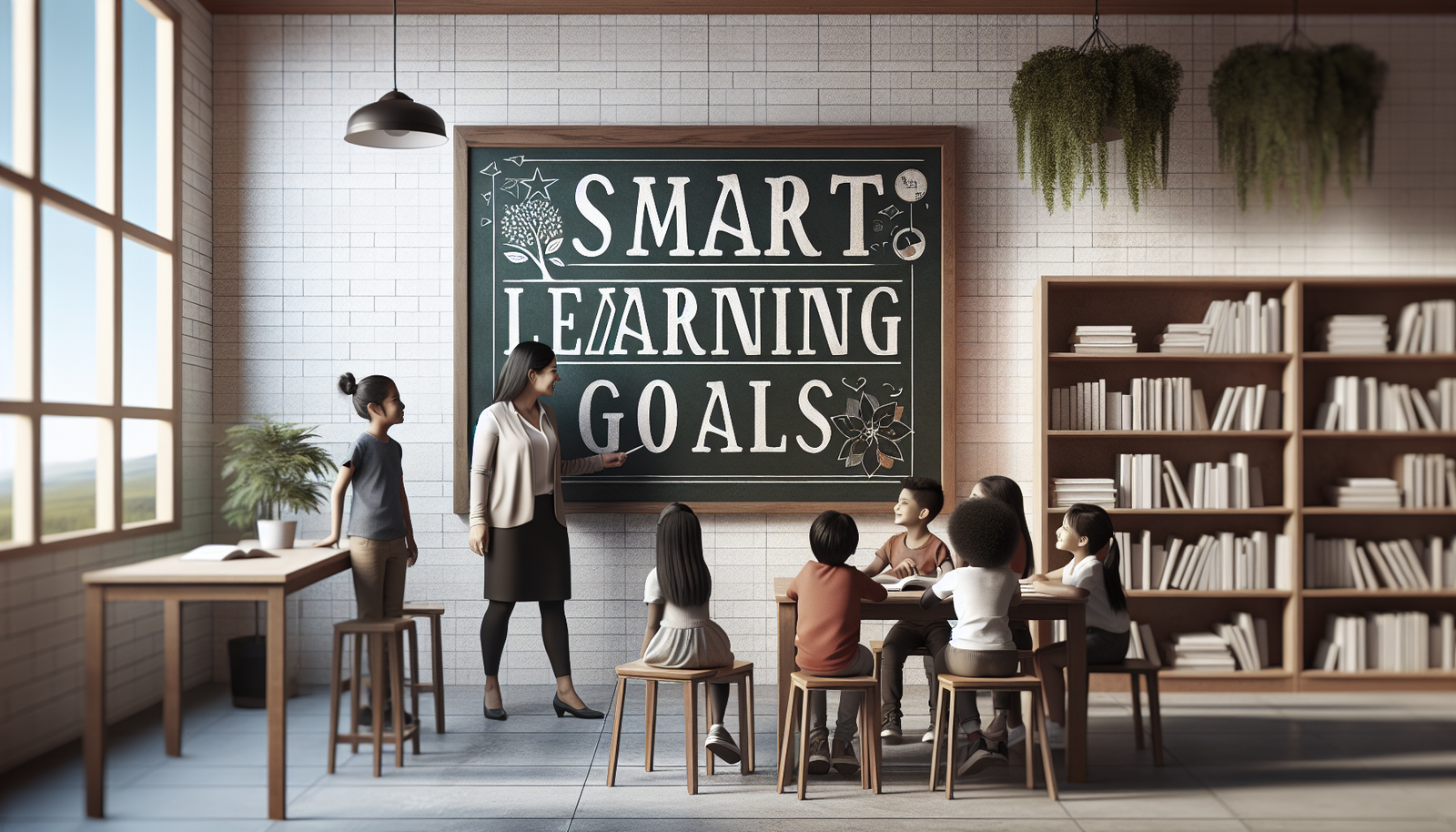
Learning objectives matter because they prevent the “Why are we doing this?” spiral. When students know the target, they can self-check and practice on purpose.
In my classroom, I treat objectives like a roadmap and a promise. If you can’t explain the objective in student-friendly language, it’s probably too vague.
Here’s what “good” looks like:
- Students can repeat the goal in their own words.
- You show what success looks like (a model answer, rubric language, or a short example).
- The objective connects to the task you’re giving them, not just a slide title.
Because honestly—if the objective is hidden, students assume the lesson is random. And then engagement drops.
How to write SMART goals (with a real classroom example)
SMART goals are helpful when they’re specific enough to measure. Not “improve reading,” but “improve the skill.”
SMART: Specific, Measurable, Achievable, Relevant, Time-bound.
Example (Math, Grade 6):
- Vague: “Improve multiplication skills.”
- SMART: “By the end of the 3-week unit, 80% of students will score at least 8/10 on a multiplication fluency quiz covering factors 0–12, with no more than 2 errors per 2-minute section.”
Then you build your practice around that. I also like to set a “growth checkpoint” for week 1 so you’re not waiting until the end to realize the plan didn’t work.
Communicating goals (and the “how we’ll know” part)
Sharing the goal at the start is step one. Step two is showing the measurement.
Try this routine:
- Day start (30 seconds): “Today we’re learning to ___.”
- Success criteria (15 seconds): “You’ll know you’re on track if you can ___.”
- One quick check (2 minutes): Students do a tiny version of the task.
- Revisit (end of class): “What did you do today that proves you’re getting better?”
If students participate more when you ask them to describe success criteria, that’s not magic—it’s clarity.
Differentiated Instruction
What differentiated instruction is (and what it isn’t)
Differentiated instruction means you adjust how students access and demonstrate learning. It doesn’t mean you lower expectations or change the standard into something unrecognizable.
In practice, I differentiate in three places:
- Content access: visuals, sentence frames, vocabulary supports, worked examples.
- Process: grouping, scaffolds, pacing, reading supports.
- Product: how students show what they know (writing, diagram, oral explanation, performance task).
The goal is the same for everyone: meet the learning target. The pathway varies.
Tiered assignments + choice boards (copy/paste friendly)
Tiered assignments are my go-to because they keep the core concept the same while adjusting complexity.
Example (ELA, Grade 8: Theme in a short story)
- Tier 1 (Support): Provide 3 theme statements and ask students to match each statement to 2 pieces of evidence from the text. Sentence frames included.
- Tier 2 (On-level): Students identify a theme and write a paragraph using 2–3 pieces of evidence. No provided options, but a vocabulary word bank is included.
- Tier 3 (Extension): Students analyze how two characters develop the theme and explain how the author’s choices shape meaning. Require a counterpoint or alternative interpretation.
Choice board (Product options):
- Write a 6–8 sentence theme paragraph
- Create a labeled theme diagram (claim + evidence + reasoning)
- Record a 2-minute explanation using a script outline
- Build a short “theme evidence” slideshow with 3 slides
If you don’t want to create tiers from scratch every time, start with one standard task and adjust only the supports and complexity. That’s how you stay sane.
Assessing understanding without guessing
To differentiate well, you need to know where students are. I rely on formative checks that reveal misconceptions, not just completion.
Use:
- Quick diagnostics: 3–5 questions at the start of a lesson to find gaps.
- Guided practice checks: “Show me step 1” or “circle the sentence that proves your claim.”
- Performance tasks: short, skill-based demonstrations (not big projects every day).
- Self-assessment: “I can ___ / I’m working on ___ / I need help with ___.”
Then adjust. If most students miss the same step, it’s not a student problem—it’s an instruction problem.
Formative Assessment Strategies
Exit tickets that actually tell you something
Formative assessment is only useful if it changes what you do next. I learned that the hard way: early on, I collected exit tickets and then… moved on. Students could feel it. So I changed the routine.
Here’s a simple exit ticket formula I use:
- Question 1 (Evidence of understanding): “Solve ___” or “Explain why ___.”
- Question 2 (Targeted misconception check): Give two answers and ask which is correct and why.
- Question 3 (Confidence + next step): “Rate your confidence 1–4. What will you do to improve?”
Success criteria example: “A 3/4 response includes correct reasoning, not just the final answer.”
Tools for formative assessment (and when to use them)
Digital tools can help, but you don’t need to use them every time.
Use tech when it speeds feedback:
- Kahoot!/Quiz platforms: great for quick checks, but keep questions aligned to the objective.
- Question banks (like Quizlet): helpful for repeated practice and immediate review.
- Response systems: use polls mid-lesson to stop and reteach immediately.
Use paper when it’s faster to read and analyze by hand—especially for written explanations. You’ll often learn more from a short written paragraph than from a multiple-choice quiz.
Adjusting instruction based on data (a routine you can follow)
Here’s the adjustment cycle I recommend:
- Collect: 5–10 responses (or 1 class set if you can scan quickly).
- Sort: 3 groups: “ready,” “almost,” “not yet.”
- Act within 24 hours: reteach the missed step, not the whole lesson again.
- Re-check: a parallel question the next day.
If 60%+ of students are “not yet,” I don’t move forward. I break the skill into smaller steps and model the missing piece.
Creating a Positive Classroom Environment
Relationships first (because behavior follows belonging)
A positive environment isn’t about being “nice.” It’s about students feeling safe enough to try. In my experience, the more students trust you, the fewer you have to fight for attention.
What helps:
- Short trust-building routines (quick check-ins, “two truths and a lie,” or a 30-second share at the start of class).
- Using student interests in examples (sports stats, music lyrics, games, local events).
- Remembering names and using them consistently—especially during feedback.
- Using SEL strategies in the moment: “Let’s reset. What’s the next step?”
When students feel respected, they’re more willing to take academic risks—like asking questions or revising their work.
Rules and routines that reduce chaos
Clear routines reduce decision fatigue for both you and students. If students don’t know what to do when they walk in, engagement drops fast.
I like to keep routines simple and visible:
- Entry routine: bell ringer or “do now” task (2–5 minutes).
- Materials routine: where supplies go, how to submit work, what to do if you need help.
- Turn-and-talk routine: timer, sentence starter, and what “good” sounds like.
- Exit routine: exit ticket prompt posted before the lesson ends.
Develop rules with students where you can, but keep expectations firm. Students don’t need a vote every time—what they need is consistency.
Growth mindset language that students actually believe
Growth mindset isn’t posters on the wall. It’s the language you use when students struggle.
Try swapping:
- “You’re bad at this” → “You haven’t learned this skill yet. Let’s practice step-by-step.”
- “That’s wrong” → “That’s one strategy—now let’s test if it matches the criteria.”
Also, celebrate effort in a specific way: “I noticed you tried a new approach and checked your work—that’s what improvement looks like.”
Collaborative Learning Opportunities
Why group work can boost learning (when it’s structured)
Group work is powerful because students explain thinking to each other. That forces clarity. But unstructured group work usually turns into one of two things: off-task behavior or one student doing the work.
In structured collaboration, students practice communication, accountability, and reasoning. That’s not fluff—it’s academic skill-building.
How to structure group activities so everyone participates
If you want collaboration to work, plan it like a lesson (not like a free-for-all).
- Assign roles: facilitator, recorder, skeptic/checker, and presenter.
- Provide a clear product: a paragraph, a solved problem set, a shared graphic organizer, or a short presentation.
- Use a time plan: 2 minutes for reading, 10 for work, 3 for sharing, etc.
- Include a “must do” accountability step: each student writes their own explanation before the group merges ideas.
- Teach conflict skills: “Disagree with the idea, not the person. Use evidence.”
One practical tip: rotate roles every 1–2 weeks. Students get stuck in patterns if you don’t.
Assessing group work without letting teamwork hide gaps
Assess the group product and the individual contribution. Otherwise, students who struggle get carried—or students who are confident do all the thinking.
I use:
- Peer assessment with a rubric: “Rate how well your partner used evidence and contributed ideas.”
- Individual notes: a quick reflection after group work: “One thing I learned / One question I still have.”
- Teacher observation checklist: who participated, who needed scaffolds, and what misconceptions appeared.
That combination keeps groups accountable while preserving the benefits of collaboration.
Incorporating Real-World Applications
Make lessons feel relevant (without forcing it)
Students engage when they can see why learning matters. But you don’t need to invent a “real world” story every day.
What I do instead:
- Use case studies that mirror the skill (data interpretation, argument writing, problem solving).
- Build simulation tasks with clear constraints (budget limits, time limits, role requirements).
- Link to current topics students already care about (sports metrics, climate headlines, local community issues).
When lessons connect to real situations, you’ll hear better questions and you’ll get stronger explanations because students are trying to solve something, not just answer prompts.
Project-based learning (PBL) that doesn’t drag on for weeks
Project-based learning works when the project is tied tightly to a learning target and has checkpoints.
Here’s a simple PBL structure:
- Driving question: “How can we ___ to solve ___?”
- Milestones: proposal, research/inputs, draft/product, final reflection.
- Rubric aligned to standards: content + reasoning + communication.
In my experience, shorter PBL cycles (1–2 weeks) are easier to manage and keep momentum. Big projects can work too—you just need more scaffolding.
Guest speakers and field trips (use them to deepen learning)
Guest speakers and field trips are great, but they should feed back into class learning—not just be “an experience.”
Before and after, I recommend:
- Before: students write 2 questions they want answered.
- During: students collect evidence (notes, photos of artifacts, quotes).
- After: students write a reflection connecting experience to the concept.
This turns the outing into a learning loop, not a one-day event.
Continuous Professional Development
Why I keep learning as a teacher
Education changes—standards update, student needs shift, and technology evolves. If you stop learning, your instruction starts to feel stale. I’ve seen it happen. The best teachers I know keep trying new strategies, even if it’s just one small change at a time.
Workshops, conferences, and learning communities
Workshops and conferences are useful when you leave with something you can actually implement. When I attend, I look for:
- Concrete examples (lesson routines, assessment templates, sample materials)
- Time to practice or plan with others
- Opportunities to follow up with a community afterward
Professional learning communities are especially helpful because you can compare what worked in your classroom and what didn’t.
Peer feedback (the fastest way to improve)
Peer feedback can be uncomfortable—but it’s one of the fastest ways to improve instruction.
If you’re starting, try a simple observation focus like:
- Are students given enough time to practice?
- Do questions require reasoning or just recall?
- How quickly do you address misconceptions?
Then ask for one suggestion you can test next week. That’s how feedback becomes action.
Evaluating the Effectiveness of Teaching Strategies
Reflect like a teacher, not like a critic
I keep a quick reflection habit after lessons: what went well, what didn’t, and what I’ll change next time. It’s not a diary—it’s a decision tool.
Try prompts like:
- Which question produced the most confusion?
- Where did engagement drop (and what happened right before it)?
- Did my instruction match the objective?
- What evidence do I have that students improved?
Collect student feedback that’s actually actionable
Student feedback is gold—if you ask the right questions.
Instead of “Was this good?” ask:
- Which activity helped you understand the most?
- What part felt confusing?
- What should I do more of next time?
- What should I do less of?
Use the responses to adjust pacing, clarity, and scaffolds.
Make data-driven decisions (without overreacting)
Data-driven doesn’t mean you panic every time a quiz score is lower than you hoped. It means you look for patterns.
I recommend reviewing:
- Exit ticket trends (where students consistently miss)
- Quiz item analysis (which question types fail)
- Assignment quality (are students meeting criteria or just completing work)
Then set a realistic improvement goal for the next cycle—like “increase correct responses on fraction comparison items from 45% to 65%.” If you don’t see growth, you adjust instruction again.
FAQs
Effective active learning techniques include think-pair-share, structured group discussions, problem-solving tasks with clear success criteria, and hands-on or simulation-based projects. The key is to structure the activity (timers, roles, and a specific product) so students practice the skill—not just talk.
Instead of labeling students, I recommend designing lessons with multiple supports: visuals (charts, diagrams, organizers), verbal supports (model explanations, guided discussion), and hands-on options (manipulatives, simulations, graphic organizers). This gives students different ways to access the same learning target.
SMART goals are Specific, Measurable, Achievable, Relevant, and Time-bound. They matter because they clarify what students must learn and how you’ll measure progress. When goals are measurable, it’s much easier to plan instruction and adjust quickly based on evidence.
A positive classroom environment comes from relationships, consistent routines, and growth mindset language. When students feel safe to ask questions and you respond with clear next steps, classroom culture improves—and engagement follows.