
Creating Project-Based Evaluations: 8 Essential Steps to Success
Project-based evaluations can feel like you’re trying to solve a Rubik’s Cube while someone keeps moving the table. You know it matters. You just don’t always know which piece to touch first.
In my experience (especially with PBL units where students are doing real work, not just worksheets), the confusion usually comes from one thing: the evaluation plan isn’t connected tightly enough to the project goals. When that link is clear, everything else gets easier—rubrics, checkpoints, feedback, even the data.
Below, I’m going to walk you through 8 practical steps I use to build project-based evaluations that are actually usable. No fluff. Just the stuff you can copy into your next unit and make improvements as you go.
Key Takeaways
- Start with clear project objectives and a scope you can defend (so you don’t chase “extra” work).
- Write evaluation criteria that are measurable—use SMART goals so targets aren’t vague.
- Build rubrics before the project starts, and include benchmark deliverables at predictable checkpoints.
- Use formative assessments to steer during the project and summative assessments to judge mastery at the end.
- Collect data with a mix of numbers and comments, then analyze for trends (not just single scores).
- Run comprehensive evaluations with stakeholder input, not just teacher impressions.
- Give feedback that points to one next action (what to change, how to change it, and when).
- Integrate evaluation results into performance management so improvements don’t disappear after grading.

Step 1: Define Project Objectives and Scope
Let’s start with the part that makes everything else work: objectives and scope. If you skip this, your evaluation turns into guesswork. I’ve seen it happen—teams end up scoring “effort” instead of the actual learning or performance targets.
First, write 2–4 project objectives you can measure. In K–12, that might be “students will explain cause-and-effect using evidence.” In higher ed, it could be “students will design and justify a research method.” In corporate training, maybe it’s “participants will produce a client-ready proposal.” Same idea—different context.
Then tighten the scope. Decide what’s included and what’s out of bounds. This is how you prevent scope creep (the silent evaluation killer). A scope statement also tells students what they’re responsible for, not what the teacher hopes they’ll do.
Project scope statement template (copy/paste):
- Project title: ____________________________
- Target audience: ____________________________
- Duration: ____ weeks (e.g., 6 weeks)
- Deliverables (what students/teams must produce): ____________________________
- In-scope skills/standards: (list 3–6) ____________________________
- Out-of-scope items: (what you won’t evaluate) ____________________________
- Constraints: tools/resources/time limits ____________________________
- Stakeholders: who provides feedback ____________________________
Example filled-in (PBL unit, 6 weeks): Deliverables: (1) proposal draft, (2) prototype/model + rationale, (3) final presentation with Q&A. In-scope: evidence-based reasoning, collaboration roles, communication clarity. Out-of-scope: “perfect design aesthetics” (you’ll evaluate reasoning and usability, not art style). Constraints: groups of 4, 2 class periods for production each week, limited materials list.
One practical tip: make your objectives and scope visible. Put them at the top of the unit plan and the rubric. When students ask “Is this enough?”, you can point to the same document every time.
Step 2: Develop Evaluation Criteria
Evaluation criteria are your “yardstick.” They tell you what success looks like in plain language. If your criteria are fuzzy, your scoring will be inconsistent—which means your data won’t be trustworthy.
Start by mapping criteria to your objectives. For each objective, ask: What would we see in the work that proves this goal was met?
Then decide what data you’ll use. I like to include both:
- Quantitative: rubric scores, checklist totals, participation counts, quiz results.
- Qualitative: student reflections, teacher notes, peer feedback themes.
Here’s a simple way to keep criteria measurable: use a 1–5 scale and define what each level means for each criterion (even if you start rough). For example, if one criterion is “Evidence use,” you might define:
- 5 (Exceeds): claims are consistently supported by relevant evidence; citations/links included.
- 3 (Meets): evidence supports most claims but sometimes misses relevance or clarity.
- 1 (Beginning): claims are mostly not supported or evidence is inaccurate.
Keep your goals SMART. For instance:
- “Increase student participation in group discussions from an average of 2 turns per student to 4 turns within 3 weeks.”
- “By week 6, 80% of students will score 3 or higher on the ‘evidence use’ rubric category.”
That last part matters. When your criteria come with a target (like 80% hitting a “3+”), it’s much easier to decide whether the project design is working.
Step 3: Create Project Rubrics and Benchmark Deliverables
Rubrics are your roadmap, but only if they’re built around deliverables you’ll actually collect. I always start by listing the deliverables, then I write rubric categories that match them.
What to include in a project rubric:
- Criteria categories: usually 4–6 (not 15).
- Performance levels: common scales are 1–4 or 1–5.
- Evidence examples: 1–2 bullets per level so graders aren’t guessing.
- Weighting: optional, but helpful (e.g., final presentation counts 50%, prototype 30%, reflection 20%).
Now add benchmark deliverables. These are checkpoints that let you intervene before the final submission.
In a typical 6-week PBL unit, I’ll set benchmarks like:
- Week 2: topic + driving question + initial plan (short submission)
- Week 3–4: first draft of the main deliverable (e.g., 1-page proposal or storyboard)
- Week 5: near-final prototype/model + evidence plan
That mid-point draft is a big one. If you only evaluate at the end, you’re stuck “grading” problems instead of fixing them. When I used a mid-point rubric checkpoint on a science design project, I saw a noticeable shift: students who were trending at 2/5 on “evidence use” moved to 3/5 by the final because we coached them during week 4 (not week 6).
Rubric sharing tip: share the rubric on day one. Not as a “gotcha,” but as a guide. When students know what “strong” looks like, fewer questions turn into “Are you grading this?” and more questions turn into “How do we reach level 4 for criterion X?”
Step 4: Plan for Formative and Summative Assessments
Here’s where a lot of evaluations get messy: teachers collect “feedback” during the project, but it doesn’t actually change anything because it isn’t tied to the rubric or the next step.
So plan deliberately for both:
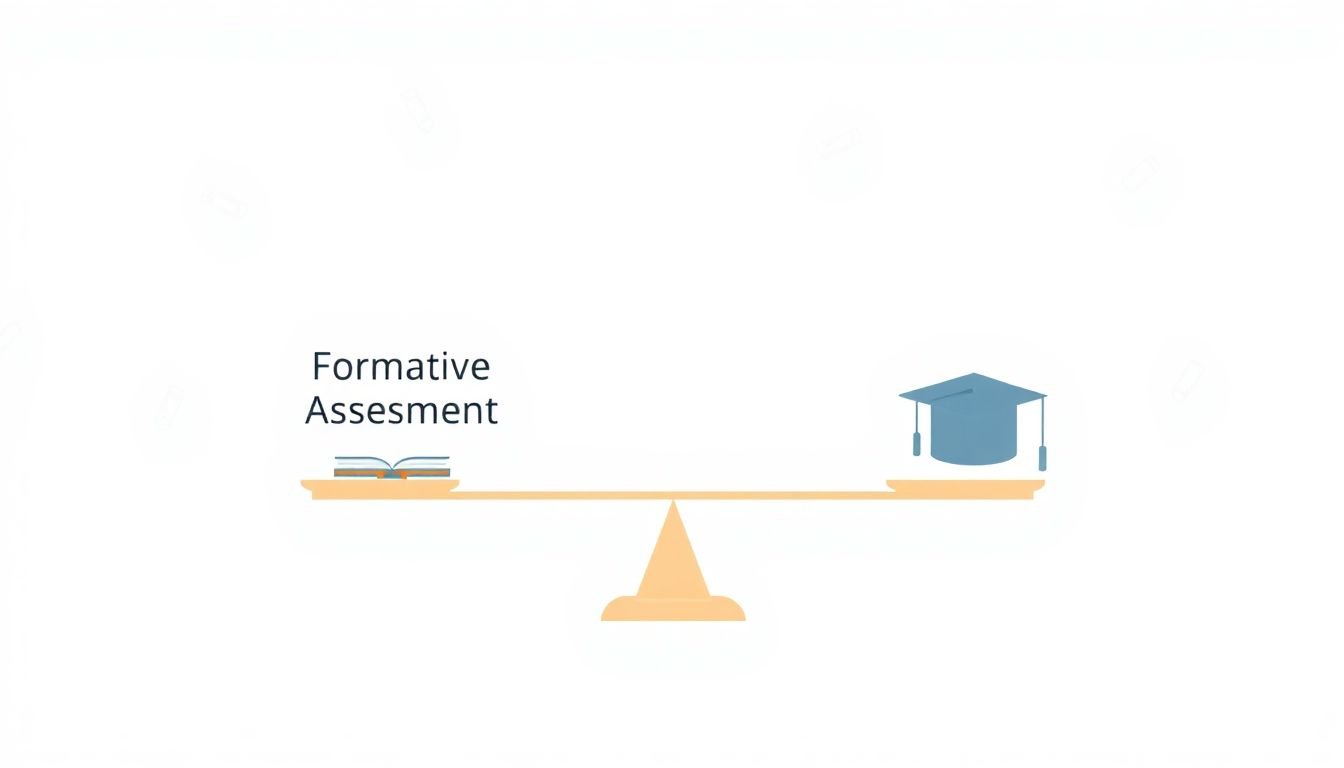
Formative (during the project): low-stakes checks that help students adjust. Think: drafts, quick quizzes, peer review, conference notes.
Summative (at the end): the final judgment against your objectives. Think: final presentation, final product, capstone report.
In a PBL unit, I recommend you use formative checkpoints that map directly to rubric categories. For example:
- Formative checkpoint: Week 3 draft scored on “evidence use” and “clarity of explanation.”
- Summative: Week 6 final presentation scored on all rubric categories.
Practical example of what to collect:
- Formative artifacts: 1-page proposal, storyboard or outline, peer feedback form, short reflection (“What did we change after feedback?”).
- Summative artifacts: final slide deck/poster, final report/prototype, rubric score sheet, Q&A notes.
And yes—self-reflection and peer assessment can be formative gold. Just don’t treat them as “free points.” Use a simple structure (like 3 prompts) and connect it to the rubric so it’s not random.
Step 5: Collect and Analyze Data
Data is only useful if it answers a question. So decide what you’re trying to learn before you start collecting.
In project evaluations, I typically collect three types of metrics:
- Rubric scores: category scores (e.g., 1–5) and overall score.
- Engagement indicators: participation counts, attendance during work sessions, on-time checkpoint submissions.
- Qualitative themes: reflection comments, common peer feedback patterns, teacher observation notes.
Numbers help you spot trends fast. For instance, with a 1–5 rubric scale, you can look at:
- Score distribution: how many students are at 1–2, 3, and 4–5.
- Category weaknesses: which rubric category is lowest on average.
- Checkpoint movement: compare Week 4 draft scores vs. Week 6 final scores.
Example interpretation (realistic numbers): Suppose you have 30 students. On “evidence use,” Week 4 average is 2.2/5. By the final, it’s 3.3/5. That’s a gain of 1.1 points. If 60% of students reach “meets” (say level 3 or higher) by the final, you can reasonably say the coaching at the checkpoint helped.
If you want to go a step further, you can use basic stats without making it complicated:
- Average and median: shows central tendency.
- Standard deviation: tells you if students are clustering together or wildly spread out.
- Effect size (simple version): compare pre vs. post averages using a basic standardized approach (even a calculator spreadsheet works).
For qualitative data, don’t just read it and “feel” it. I like to code reflections into 3–5 themes (example: “clarity improved,” “evidence improved,” “group roles unclear,” “time management issues”). Then count how often each theme appears.
Finally, present results in a way stakeholders can use. A dashboard-style summary works well:
- Top 3 strengths (highest average categories)
- Top 2 growth areas (lowest categories or biggest gaps)
- Checkpoint impact (draft vs. final movement)
- Student voice (2–3 representative quotes tied to themes)
That’s how you turn “data collection” into actual decisions.
Step 6: Conduct Comprehensive Project Evaluations
This step is basically: look back with a purpose. Don’t just ask “Did students meet the goals?” Ask “What in the design helped—and what got in the way?”
I recommend involving multiple stakeholders so you don’t only get one perspective. In my experience, students notice things teachers miss (like unclear instructions or confusing expectations). Parents/guardians or managers can add context too, especially when projects connect to real-world needs.
Use your rubrics to score each deliverable, then revisit:
- Did performance match objectives?
- Which rubric criteria were most inconsistent?
- Were benchmarks useful? (Did draft feedback change outcomes?)
- Was the scope realistic? (Did students run out of time? Did you overload them?)
Document strengths and gaps. Then write an evaluation report structure you can reuse:
- Project overview: goals, timeline, deliverables
- Evaluation method: rubric categories, formative vs. summative plan
- Results: category averages, distribution, trends across checkpoints
- Stakeholder feedback: themes + representative quotes
- Interpretation: what the results mean (and why you think it happened)
- Action plan: 3 changes for next cycle (with owners and dates)
And yes, celebrate successes. But be specific. “Students did well” isn’t enough. Say what improved: higher evidence scores, fewer missing deliverables, stronger peer collaboration, better Q&A responses, etc.
Step 7: Provide Action-Focused Feedback
Feedback is where improvement actually happens. The problem? Most feedback is either too generic (“good job”) or too late (“nice effort”).
Action-focused feedback should answer three questions:
- What exactly is working? (point to a rubric category)
- What needs to change? (name the specific gap)
- What’s the next step? (give one concrete action)
Instead of “good job,” try something like: “Your research is thorough, but your conclusion doesn’t connect back to the evidence. Next time, add a 3-bullet ‘evidence-to-claim’ section before you present.”
Timing matters too. If you can, provide feedback at least one checkpoint before the final submission. That gives students time to apply it. Waiting until the end means you’re basically grading finished work, not guiding learning.
Peer feedback can also work really well—if you structure it. For example:
- Peer reviewer identifies one strength using rubric language.
- Peer reviewer identifies one improvement target.
- Peer reviewer suggests one specific revision (not “be better”).
That structure reduces vague comments and increases the odds students actually use the feedback.
Step 8: Integrate with Performance Management
If you’re doing project-based evaluations in schools or training programs, this step is what keeps the work from fading after the unit ends.
Integrate your evaluation findings into broader performance management by aligning them to goals at the school/district level or program level. In plain terms: if leadership cares about student agency, communication, or skill mastery, your rubric categories and feedback themes should reflect that.
Here’s a simple example: if an objective is “improve student agency,” you shouldn’t only measure it indirectly. Include criteria like:
- students propose a plan and justify it
- students revise their work after feedback
- students take responsibility for roles and timelines
Dashboards can help you visualize performance at a glance. Even a spreadsheet works if it’s consistent. I like a summary view that shows:
- average score by rubric category
- percentage meeting target (e.g., 3+ on a 1–5 scale)
- growth between checkpoints
- top 2 teacher actions needed next cycle
Now about success stories: don’t just “tell a story.” Document what actually happened and what others can replicate.
What counts as a success story (so it’s useful):
- Which rubric category improved (and by how much)?
- Which benchmark checkpoint triggered the improvement?
- What intervention did you try (mini-lesson, example model, re-teach evidence)?
- What artifact changed (draft quality, prototype alignment, final clarity)?
- Who can repeat it, and where is the template/rubric stored?
Put these in a shared evaluation report section (or a “Next Cycle Notes” page). If you have a template, great—use it. If you don’t, create one. The goal is repeatability, not praise.
Conclusion
When project-based learning is done well, evaluation doesn’t feel like a last-minute scramble. It feels like a feedback loop: goals → criteria → rubrics → checkpoints → data → improvements.
Define objectives and scope so your evaluation has a target. Build measurable criteria and rubrics so scoring is consistent. Plan formative and summative assessments so students can improve before they’re judged. Then collect and analyze data to find patterns you can act on.
If you want more ideas that support the same outcomes, check out effective teaching strategies and student engagement techniques.
Do that, and you’re not just assigning projects—you’re building a system that helps learners get better every cycle.
FAQs
Project objectives describe what the project is trying to achieve. Scope defines the boundaries—what’s included, what deliverables are required, and what isn’t part of the project. Together, they keep expectations clear.
Start by aligning criteria to your objectives, then make them measurable. Involve stakeholders so the criteria reflect real priorities and are practical to assess—not just theoretical.
Formative assessments happen during the project to guide improvement. Summative assessments happen at the end to evaluate overall mastery and determine whether objectives were met.
Actionable feedback should be specific, tied to rubric language, and focused on the next revision. Deliver it early enough that students can apply it, and encourage a quick follow-up so they know what to do next.