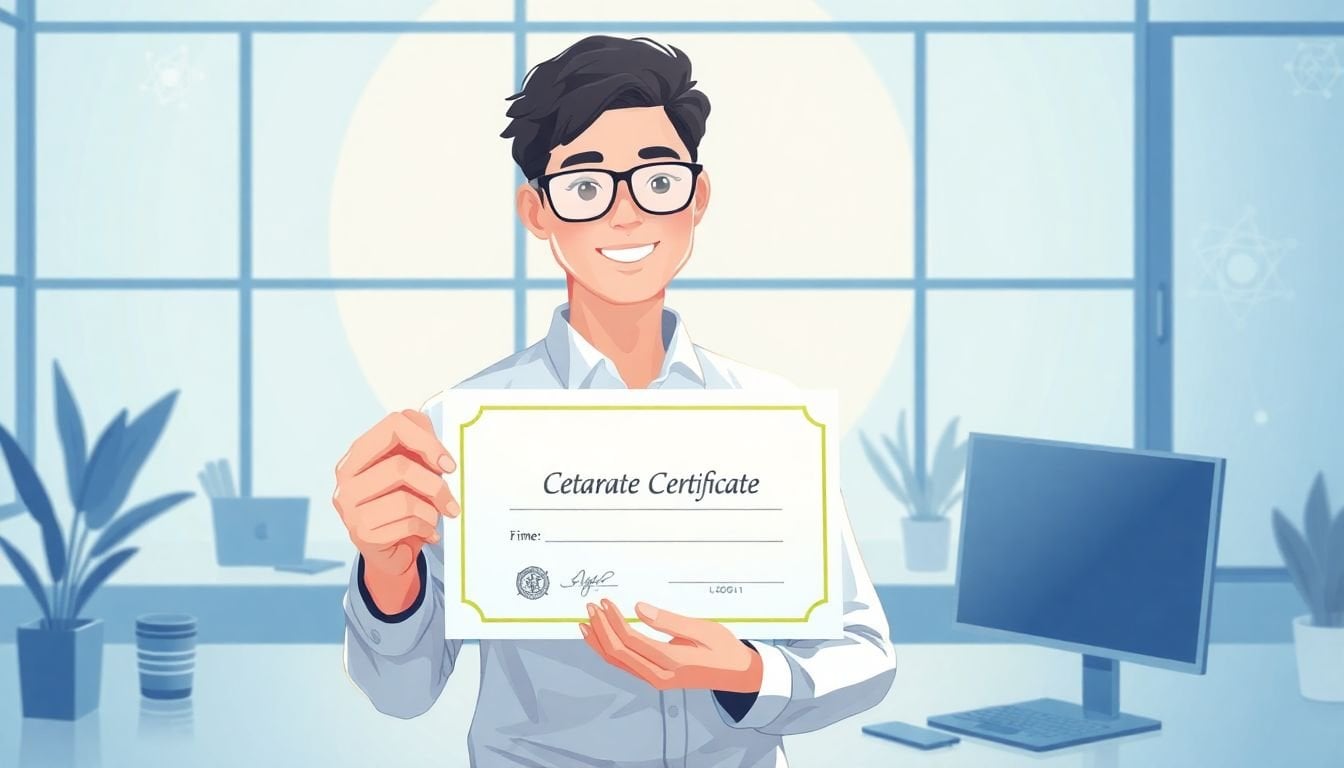
AI-Driven Micro-Credential Issuance: How to Improve Skill Verification
Most people don’t mind learning new skills. It’s the proof part that gets messy—forms, spreadsheets, waiting weeks for someone to “sign off,” and then hoping an employer actually trusts the paperwork. What if you could verify competence faster, with less admin work, and without turning everything into a bureaucracy?
That’s where AI-driven micro-credential issuance starts to feel genuinely useful. I’ve seen how quickly things break down when assessment is mostly “attendance + a quiz” and the credential ends up being a proxy for participation instead of real ability. AI helps close that gap by evaluating evidence (projects, practical tasks, recorded demos, structured tests) and issuing micro-credentials when clear benchmarks are met.
In my experience, the biggest win isn’t just speed. It’s consistency: if the criteria are defined well, the evaluation is repeatable, and employers get a credential that’s tied to demonstrated performance—not just time spent in a course.
Key Takeaways
Key Takeaways
- AI can issue micro-credentials faster by evaluating submitted work against predefined rubrics and competency benchmarks. Instead of waiting for manual grading, credentials can be issued once evidence meets the threshold.
- Automated assessment reduces busywork by scoring quizzes, analyzing project outputs, and running practical checks (like code execution or scenario-based troubleshooting). Fraud signals—like copied work or suspicious submission patterns—can be flagged early.
- Learner experience improves when feedback is immediate. AI can recommend the next module based on what a learner got wrong (not just what they completed), which makes the path feel less random.
- Skills tracking becomes more “live”. With the right data model, you can update a learner’s skill profile as they demonstrate mastery—so training providers aren’t stuck with static spreadsheets and outdated records.
- Getting started is mostly design work: pick the right skills, define what “good” looks like, choose assessment types AI can evaluate reliably, and document how scoring maps to each micro-credential.
- Employer acceptance matters. The more transparent and standards-aligned your credentialing is, the easier it is for employers to trust and compare credentials across programs.
- Challenges are real: bias, gaming, and tampering are not theoretical. You’ll need validation steps (ground truth, audits, calibration), plus a security approach (like verifiable credentials) to protect trust.
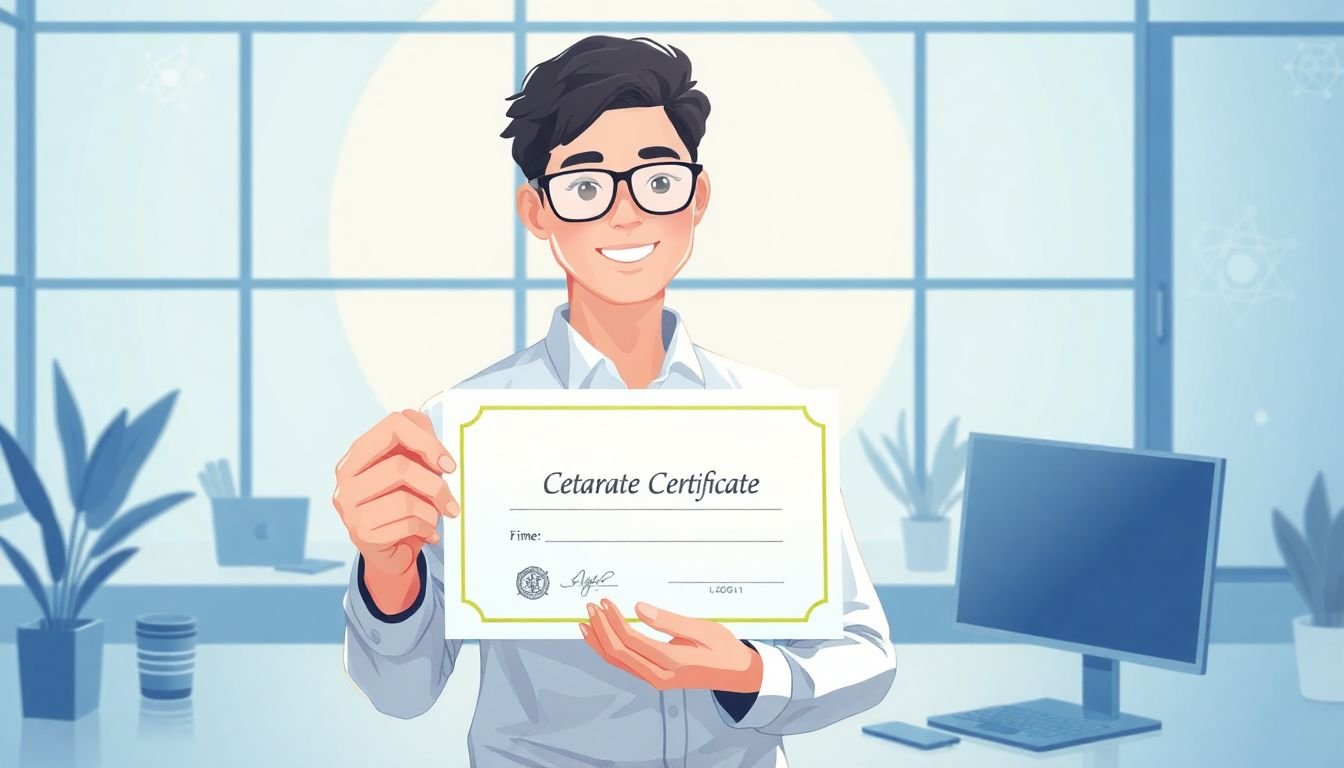
AI-Driven Micro-Credential Issuance: The Future of Skill Verification
Getting verified for new skills used to mean a lot of waiting. You’d finish a course, submit paperwork, and then hope someone would translate your learning into something an employer actually understands. AI is changing that pace.
Here’s what “AI-driven micro-credential issuance” looks like in practice: you define a skill (say, “Python debugging fundamentals”), set specific evidence requirements (unit tests passed, bug explanation rubric, short scenario fix), and then use AI to evaluate submissions against those benchmarks. When the score crosses the threshold, the system issues the micro-credential immediately.
Why does that matter? Because the credential starts reflecting demonstrated competence, not just attendance or memorization. And if the system is designed well, it can also support verification steps like reviewer sampling, audit trails, and fraud checks—so it’s not “trust me” verification.
In my experience, the most important part is standardizing how the evidence maps to the credential. Otherwise, you end up with badges that look impressive but don’t mean much. That’s also why interoperability matters: credentials need to be portable and verifiable across tools and institutions, not trapped inside one platform.
Companies are already building toward that workflow. For example, Create AI Course is working on automating parts of the process—especially around turning course content into structured assessments and credential outputs.
Streamline Micro-Credential Issuance with AI
If your current credentialing process relies on manual grading, it’s going to feel slow and inconsistent as your cohort grows. AI helps by moving scoring and issuance closer to the moment evidence is produced.
What I’d do first is define clear criteria. Not vague outcomes like “understands marketing,” but concrete benchmarks like:
- Completes a scenario analysis with at least 80% rubric alignment
- Produces a working artifact (report, code, diagram) that passes required checks
- Explains decisions using a specific framework (and the explanation is evaluated against that framework)
Then you use AI to analyze the evidence automatically—quizzes, structured responses, project submissions, and sometimes practical tasks. The key is to choose assessment types AI can score reliably. Multiple-choice and rubric-based short answers are usually easier to validate than open-ended “vibes.”
For example, Udemy course creation tools (and similar ecosystems) have added AI-related modules that help verify student progress and support badge issuance workflows in real time. The practical value here is that progress evaluation and credential issuance can be triggered by measurable completion and performance criteria, rather than waiting for end-of-term review.
One workflow detail that makes a difference: don’t let AI be the only judge at the beginning. I recommend a hybrid approach during pilots:
- AI scores everything
- Human reviewers audit a small percentage (like 5–10%) to confirm accuracy
- You adjust thresholds based on where AI disagrees with human scoring
That’s also how you prevent false positives—when someone “passes” due to a scoring quirk rather than real mastery. Over time, you can reduce manual review as calibration improves.
On the fraud side, AI can help detect suspicious activity, but it’s not magic. What it can do well is flag patterns like:
- Text similarity spikes (possible copying)
- Submission timing anomalies (e.g., completed too fast for the task complexity)
- Unusual response patterns compared to prior performance
And when it flags something, you need a clear rule: review, require a retake, or request additional evidence. Otherwise, you’ll just create frustration and more support tickets.
Finally, embed the assessment and issuance flow into your LMS (or whatever system you use). A smooth flow looks like: learning → evidence capture → automated scoring → decision threshold → credential issuance → verification link stored on the learner profile.
Practical implementation checklist: define benchmarks, pick evidence types AI can score, set thresholds, run a human-audit pilot, log decisions, and add fraud review rules. That’s the “trustworthy” part.
Enhance the Learner Experience Using AI
Let’s be honest—learners don’t love waiting to find out whether they actually mastered something. AI makes the experience feel more immediate.
Instead of “finish the module and maybe you’ll get a badge later,” learners get feedback tied to the specific skill. AI can personalize content and practice based on what they missed. For instance, if someone keeps failing a troubleshooting scenario, the system can recommend a targeted mini-lesson or additional practice set that matches the exact weakness.
I’ve also noticed that learners engage more when feedback is specific. “Good job” doesn’t help. But “Your explanation misses the root-cause step in the rubric” does. When AI structures feedback around your rubric categories, it’s easier for learners to improve quickly.
Some platforms use AI tools for coaching-style interactions, like chat-based tutors. If you’re using these, a smart approach is to keep the chatbot focused on learning support—not credential decisions. Let it guide the learner, but keep the credential scoring tied to evidence and rubrics that you can validate.
So what does this look like in real terms?
- Learners complete an assessment task
- AI scores it using your rubric and evidence rules
- They get instant feedback (what they did right, what to fix)
- If they meet the threshold, they receive the micro-credential right away
- If they don’t, they get a recommended “next attempt” path
That loop—score → feedback → retry → credential—is where AI really earns its keep. It makes learning feel responsive, not like a one-way street.
How AI Can Help Universities and Training Providers Remember and Track Skills
Universities and training providers have a real problem: skills get scattered across systems. One course uses one format, another uses a different rubric, and someone’s “certification” might live in an email thread.
AI helps because it can normalize and update records based on actual evidence. The practical workflow is pretty straightforward:
- AI reads assessment outputs (test results, assignments, project artifacts)
- It maps results to your skill taxonomy (e.g., “data cleaning,” “SQL joins,” “patient intake workflow”)
- It updates the learner profile or credential record when milestones are hit
Instead of manual updates, you get an ongoing, real-time-ish record of skills. That’s great for advising and curriculum planning because you can see what learners actually master and where they struggle.
If you want to implement this, integrate AI assessment tools into your LMS so scoring and badge issuance happen in one pipeline. Then define benchmarks per skill so the mapping is consistent.
And if you’re looking at ways to structure lesson or assessment content to work with AI scoring, tools like AI-powered lesson analysis can help simplify the process of turning learning objectives into something measurable.
The end goal isn’t just “more badges.” It’s a clearer picture of competency over time—so training providers can improve curricula based on evidence, not guesswork.
How to Get Started with AI-Generated Micro-Credentials in Your Organization
If you’re planning to roll this out, don’t start with the badge. Start with the assessment design.
Here’s the order I’ve found works best:
- Pick the skills that matter most (job-relevant, measurable, and teachable). Don’t try to credential everything at once.
- Define what evidence counts. For example: code that runs, a report that meets a rubric, a scenario response that demonstrates a specific process.
- Build a scoring rubric that AI can follow consistently. If your rubric is vague, AI will be vague too.
- Choose an issuance rule: thresholds, minimum evidence requirements, and retake policies.
- Use a compatible platform that supports automatic badge/certificate issuing. For example, AI-enabled learning platforms can help structure lessons and assessments so they feed into credential outputs.
Now the part people skip: validation. If you’re training or configuring AI scoring, you need ground truth. That usually means:
- Collect real submissions
- Have experts label or score them using the rubric
- Compare AI scores to expert scores and calculate agreement
- Calibrate thresholds so the pass rate matches your intended mastery level
You also want adversarial testing. What happens if someone tries to game the system? You test edge cases (copy-paste artifacts, paraphrasing, partial submissions) and make sure your fraud signals trigger the right review steps.
Once you’ve got that, run a pilot. Gather feedback from learners and reviewers. Then iterate. Credentialing isn’t “set it and forget it”—it’s a program you tune like any other.
One more thing: communicate clearly. Tell learners what will be evaluated, how scoring works, and what happens if they don’t meet the threshold. That transparency reduces support headaches.
And yes, employer acceptance matters. If you’re making claims about job relevance, you should back it up with consistent skill definitions and evidence of real-world usefulness.
How Generative AI Micro-Credentials Are Changing the Job Market
It’s not hard to see why generative AI micro-credentials are getting attention. When employers can see evidence of specific skills, hiring becomes less guessy.
That said, the stats you see online come from different surveys and sometimes different definitions of “micro-credential.” So when you quote numbers like “90% of students…” or “94% of employers…,” it’s smart to include the source and clarify whether the survey is specifically about AI micro-credentials (not micro-credentials in general).
In this article, the general claim is that learners and employers are increasingly receptive to AI-skill badges. If you want to use those numbers in your own materials, I’d recommend pulling the original survey report and matching the wording exactly. Otherwise, it can backfire when someone checks.
What I can say confidently is this: the market shift is happening because AI skills change faster than traditional curricula. Micro-credentials let training providers update assessments and issue new credentials without waiting for multi-year program revisions.
Platforms also help distribute credentials and attract learners. Coursera, for instance, has reported strong growth and increasing course enrollments in AI-related topics. Still, the credential’s value depends on whether it ties to demonstrated competence and whether employers can verify it.
So if you’re a training provider, the best move isn’t just “launch AI badges.” It’s “launch AI badges with evidence, rubrics, and verifiable issuance.” That’s what closes the gap between education and workplace needs.
What Challenges Come with AI Micro-Credentials and How to Overcome Them
AI micro-credentials can be great—but they’re not automatically trustworthy. There are a few challenges you’ll run into almost immediately.
1) Fairness and bias
AI can score unevenly if training data or rubrics reflect historical bias. The fix isn’t a one-time “bias check.” It’s ongoing audits. In practice, that means reviewing score distributions across groups, checking disagreement rates, and updating the rubric or training data when you see systematic drift.
2) Accuracy and calibration
If AI says someone passed, you need to know how often that’s correct. I recommend measuring agreement with human expert scoring (and tracking false positives and false negatives). Also, calibrate thresholds so the credential corresponds to your intended mastery level—not just “whatever the model thinks.”
3) Gaming and overfitting
Learners will try to “beat the rubric.” If your tasks are predictable, they’ll learn the pattern. That’s why you should randomize parameters in simulations, use multiple evidence types, and keep an eye on repeated submission styles. You can also require additional evidence for borderline scores (like a short oral explanation or a follow-up scenario).
4) Employer acceptance
Some employers will still prefer traditional degrees at first. Your job is to make the credential interpretable: show the skill definition, the evidence requirements, and the verification method. The easier it is to understand, the faster trust grows.
5) Security and tampering
Digital badges can be faked if they’re only images or PDF files floating around the internet. This is where verifiable credentials matter. In many modern setups, you pair AI-scored evidence with a credential format based on W3C Verifiable Credentials so the credential can be cryptographically verified end-to-end. That addresses the threat model of “someone alters or forges the credential” because verification checks the issuer signature and credential integrity.
What I like about that approach is that it’s not just “blockchain as a buzzword.” It’s a concrete verification mechanism you can test: can a third party verify the credential without contacting your staff?
6) Staff training
Educators and operations teams need to understand how AI-compatible assessments work. If they don’t, the program will drift. Short training sessions, clear documentation, and a feedback loop for reviewers go a long way.
If you tackle these challenges early—fairness, validation, security, and communication—you’ll end up with a program that’s not just fast, but credible.
FAQs
AI can speed up issuance, reduce manual scoring load, and tie credentials to measurable evidence. When it’s implemented with rubrics and validation, it also improves consistency—so the credential reflects demonstrated performance instead of attendance alone.
Blockchain-based approaches (often used alongside verifiable credential standards) help create an immutable record and support cryptographic verification. That makes it much harder to tamper with issued credentials and easier for third parties to verify authenticity.
Education, healthcare, technology, and manufacturing are common candidates because they rely on skills that can be demonstrated through assessments, projects, and practical tasks. The key is designing evidence-based rubrics that map to real job performance.